
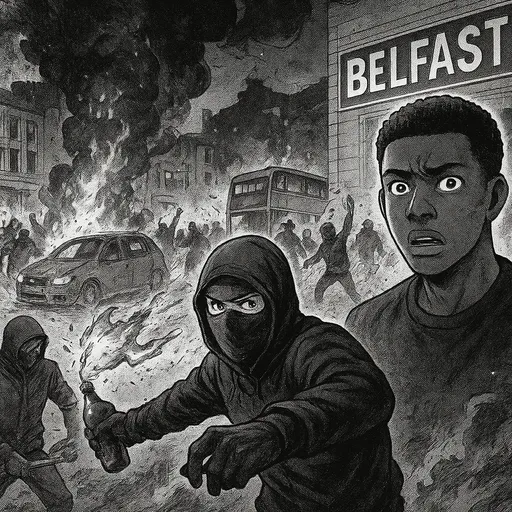
A brutal knife attack in Belfast, described in some reports as an attempted beheading, left a victim critically injured and led to the arrest and charging of a Sudanese suspect. The assault sparked widespread unrest across the city: masked youths clashed with police, vehicles, homes and buses were set alight and large protests erupted. Political leaders and security forces repeatedly appealed for calm while investigations and criminal charges (including attempted murder and weapons offences) proceeded. Coverage frames the events as both a law‑and‑order crisis and a flashpoint for wider tensions over migration, sectarian divisions and the legacy of the Troubles.
These sources emphasise the arrest of a Sudanese suspect and link the episode to migration tensions, reporting anti‑immigrant reprisals, far‑right calls to protest and demands to remove foreigners. They highlight targeted attacks on migrant homes and frame the unrest as politically charged by immigration debates.
Reports in this group focus on the scale of street violence: masked youths, rioting crowds, vehicles, houses and bins torched and heavy police deployment. They emphasise residents' fear, immediate efforts by authorities to restore order, and the visible damage to neighborhoods.
These pieces concentrate on the gruesome nature of the assault and the legal aftermath, detailing charges such as attempted murder, weapon offences and descriptions of an attempted beheading. They foreground police investigations, witness statements and prosecutorial developments as authorities seek motive and culpability.
This article situates contemporary incidents within Northern Ireland's history of political violence, recalling past IRA attacks and convictions to underline how the Troubles continue to shape perceptions of security. It frames current unrest as resonant with earlier eras of sectarian conflict.