
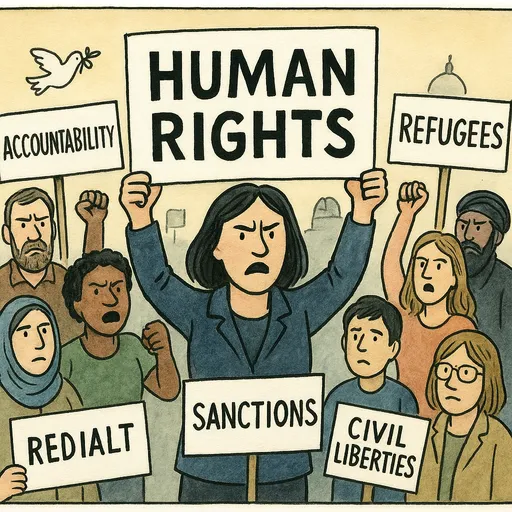
This set of reports shows a diplomatic agenda dominated by demands for accountability: UN inquiries and coordinated Western measures target settler violence and alleged state complicity in the occupied Palestinian territories, while states and rights bodies press for investigations into detentions, political prisoners and abuses elsewhere. Afghan protests and multiple reports on Taliban decrees and crackdowns highlight an urgent global focus on women's rights and civil liberties. Refugee protection and practical solutions such as employment programs and youth-led conferences appear alongside calls for sanctions, visa measures and debates over the humanitarian costs of coercive diplomacy. Domestic rights issues—from surveillance and police brutality to freedom of religion and press safety—underscore persistent governance and accountability gaps. Together these items reflect competing national positions in multilateral fora and repeated calls for stronger, more rights-respecting international mechanisms.
UN-backed inquiries, Palestinian sources and several Western governments press for accountability, documenting alleged involvement or shielding by Israeli authorities and urging sanctions or withdrawals. The perspective prioritizes independent investigation, victim protection and international measures to deter violence and forced displacement.
International observers, UN agencies and local activists decry Taliban decrees and crackdowns that curtail women's freedoms, while male-led protests signal internal dissent and demand investigations into excessive force. The view stresses gendered rights violations and calls for accountability and international pressure to protect women.
UN and civil-society reports foreground practical protection and integration measures for displaced people, highlighting livelihood programs and youth-led peace initiatives as models to reduce tensions and create durable solutions. The perspective urges sustained international support for job creation, education and local engagement to stabilize refugee populations.
Caribbean governments press the Netherlands at the UN for stronger action on modern slavery and confront regional governance challenges, while internal integrity reforms aim to restore public trust in security institutions. This viewpoint links historical legacies to current governance and anti-corruption priorities.
Regional press and rights groups document impunity for attacks on journalists and demand rigorous, transparent investigations and better protections for media workers. The stance emphasizes accountability for perpetrators and safeguards for independent reporting.
States and international bodies deploy targeted measures—visa bans and sanctions—to pressure regimes, while UN officials and observers warn that broad sanctions can produce severe humanitarian harm and undermine civilians' rights. The perspective reflects a debate between coercive diplomacy and concern for collateral impact on vulnerable populations.
Local reporting highlights tensions between public safety measures and individual rights, from intrusive neighbourhood surveillance to allegations of torture and failures to protect victims. The view calls for stronger oversight, accountability of security forces and clearer privacy safeguards.
Media and diplomatic commentary debate releases of detainees and political prisoners, questioning whether regional powers and European actors will engage constructively in negotiated processes. The focus is on due process, transparency and the diplomatic pathways for securing releases.
Governments and organizers weigh limits on political imagery and symbols in public spaces—ranging from sports venues to campus settings—to curb polarization, while critics warn of risks to free expression. The stance balances public-order rationales against rights to political speech.
The Vatican issues moral leadership calls—demanding truth, justice and repair for Church sexual violence, denouncing violence against women globally, and urging international restraint and governance over AI. This perspective frames human-rights and ethical challenges as requiring both institutional accountability and global cooperation.
Regional actors report deadly clashes and urge international scrutiny of crackdowns in disputed Kashmir territories, framing incidents as questions of human rights, political representation and cross-border responsibility. The viewpoint presses for external attention to stem violence and protect civilians.
European institutions and UN aspirants emphasize legal protections and institutional renewal—e.g., ECtHR rulings expanding religious freedoms and candidates calling to strengthen the UN's human-rights role. The perspective prioritizes jurisprudence and multilateral reforms as tools to advance rights worldwide.
Smaller states and civil-society actors express condolences and solidarity in the wake of targeted killings, framing diplomatic messages as moral support and calls for justice. The view highlights the role of symbolic international backing in local healing and accountability efforts.