

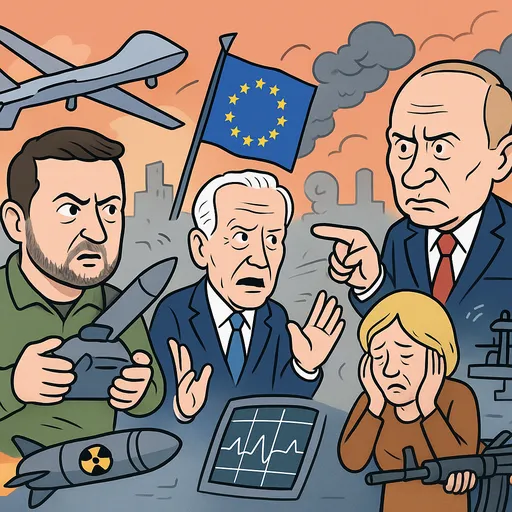
Reporting shows the war continuing on multiple fronts: Ukraine has intensified long‑range and drone strikes deep into Russian territory while Russia keeps striking Ukrainian population centers, producing fresh casualties and humanitarian needs. Kyiv’s leadership stresses Russia’s isolation and presses for sustained Western aid even as some European partners reassess arms deliveries and the EU debates new sanctions and trade limits. The conflict’s character is evolving with private military actors, naval shadow fleets, and electronic/space‑domain actions (GPS jamming, aircraft upgrades) complicating conventional battlefield dynamics. Western security institutions respond with defensive measures, sanctions and proposals for troop deployments or compensation, while Kremlin messaging and internal incidents underscore political strain inside Russia.
This group reflects Ukrainian leadership asserting that Russia is losing momentum and stressing the need for persistent Western aid to secure victory. Kyiv uses public statements to maintain international pressure on Moscow and to frame Russia as isolated and accountable.
Reports emphasise Ukraine’s increased use of drones, long‑range strikes and targeted operations inside Russian territory as tools to shift battlefield dynamics and bring pressure onto Russian infrastructure. Analysts and donors are funding maritime and aerial drone programs, while coverage highlights tactical reach and strategic intent behind these assaults.
These pieces document casualties, frontline conditions and operational realities on and near the front, including interviews with fighters and scenario assessments that warn of a prolonged and costly conflict. Coverage focuses on civilian deaths, troop captures, disrupted logistics and the daily toll of sustained combat.
This cluster reflects Western institutional reactions: new sanctions packages, debates over export controls, proposals to bar Russian soldiers from the bloc, and direct defensive cooperation such as drone‑counter assistance and ammunition pledges. The viewpoint stresses deterrence, alliance coordination and measures to limit Moscow’s military and financial capabilities.
Reporting highlights changing alignments: some governments (notably in Bulgaria) are pausing or stopping arms deliveries to Ukraine, while analysts record a perceived decline in Russian political influence and domestic popularity. The perspective captures both Western concerns about waning Russian leverage and the diplomatic complications from European governments altering support.
These articles focus on the growing role of private military contractors—Wagner and other mercenary elements—in maritime and ground operations linked to Russia. Coverage raises questions about accountability, strategic utility and the international implications of outsourcing combat roles.
This perspective emphasises upgrades to Russian hardware and disruptive capabilities, including Su‑34 modifications, naval drills during NATO exercises, and suspected satellite‑based GPS jamming affecting Europe. The reporting points to a broader contest in the electromagnetic and space domains that complicates navigation, logistics and alliance planning.
This group captures official Russian positions at seminars and in statements—demands on U.S. nuclear posture, rejection of European settlement terms, and cautious comments about the absence of an end‑game—alongside security incidents such as targeted killings that underline internal tensions. The stance projects firmness outward while illustrating domestic strains and unresolved policy directions.