
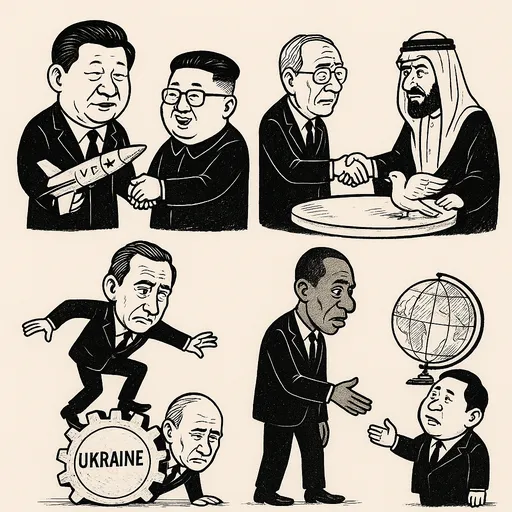
This set of reports shows an intense burst of high-level diplomacy: China’s repeated, highly publicized engagement with North Korea aims to deepen strategic ties and reshape Northeast Asian alignments. Simultaneously, regional and international actors are pursuing de-escalation in the Middle East through ceasefire talks, mediators in Cairo and Qatar, and pauses between Israel and Iran. European leaders and Kyiv continue to press for Ukraine’s integration and negotiated pathways while Russia rebuffs some outreach, underscoring fractious but active diplomacy in Europe. Across Africa, ASEAN, the Pacific and multilateral forums, states pursue governance, climate, maritime and institutional cooperation, alongside routine bilateral visits and public diplomacy that frame expectations and leverage influence.
Beijing emphasizes strengthening political, security and economic cooperation with Pyongyang, presenting Xi’s rare visits and joint communiqués as a renewal of strategic friendship and influence in Northeast Asia. Chinese state accounts and allied outlets frame the meetings as stabilizing the peninsula and balancing other great-power influences.
Regional mediators and external powers are foregrounding ceasefire negotiations and humanitarian access, with Qatar, Egypt and negotiation teams reporting progress on thorny Gaza issues and a temporary halt in Israel–Iran exchanges. European and U.S. actors, religious leaders and military advisories also shape the narrative of cautious de‑escalation and the search for durable arrangements.
European leaders and Kyiv press for stronger security guarantees, EU/NATO pathways and inclusive talks to end the war, while Kyiv’s outreach and open offers for meetings meet mixed responses from Moscow. The cluster captures allied coordination, internal debates over participation in negotiations, and diplomatic signalling about timelines and conditions for talks.
African states and regional bodies are active on governance, security and representation, from UN Security Council briefings on Central Africa to Libya’s governance track and Sudan’s call for a rapid civilian transition. Leaders also use international summits to press climate, development and political cooperation priorities and to amplify Africa’s voice in global forums.
Southeast Asian governments and partners emphasize regional stability and dialogue, re‑engaging with Myanmar’s actors, advocating border de‑escalation and using high‑level visits to bolster cooperation. The cluster also captures how historical grievances (e.g., Korea–Japan) and ceremonial diplomacy affect security and partnership talks in the region.
Insular and regional actors highlight ocean protection and maritime governance while security frictions — such as disputes over military flights — prompt diplomatic pushback to preserve regional stability and sovereign interests. These forums serve both environmental advocacy and strategic signaling.
Moscow projects openness to partnerships while regional institutions and states discuss enlargement and cooperation, with EAEU commentary and C5+1 planning reflecting efforts to shape economic and political ties across Eurasia. Bilateral gestures from Central Asian capitals complement messaging about integration and diplomatic continuity.
Leaders and envoys use visits, interviews, cultural exchanges and targeted outreach to advance ties, showcase cooperation and correct misinformation; such actions are presented as routine but instrumental tools of statecraft. These items show diplomacy’s quieter face: relationship‑building, cultural ties and reputational management.
There is active discussion of multilateral renewal: calls for dialogue among civilizations, debates about UN leadership and greater gender representation highlight efforts to reform and diversify global governance. These conversations underpin many member‑state initiatives and diplomatic agendas at international fora.
U.S. political actors sometimes publicize expected timelines for international deals to shape momentum and expectations in sensitive negotiations. Such statements signal active high‑level mediation but also raise questions about leverage and implementation windows.