
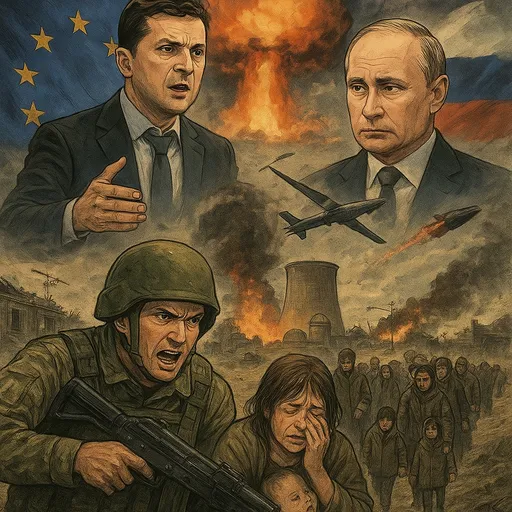
Reports show a conflict that remains militarily intense and diplomatically strained: Ukrainian leaders press Europe for support while Western governments debate aid and strategy. Russian officials and state-aligned narratives emphasize hardline positions and military claims, even as analysts highlight strategic errors and domestic consequences. Repeated strikes near nuclear sites and attacks on fuel and storage facilities have heightened international alarm about radiological safety. Cross-border drone campaigns and strikes into Russian territory, alongside evolving Ukrainian tactics against supply routes and infrastructure, signal escalation and an increasingly asymmetric battlefield. Humanitarian impacts — civilian deaths, refugees and disrupted grain exports — continue to ripple beyond the frontline, affecting regional food security and global politics.
This cluster reflects Western and pro‑Ukrainian perspectives emphasizing diplomatic engagement, continued military and economic support, and internal political debates over the scope of assistance. Sources highlight Zelensky’s outreach to European leaders, parliamentary aid votes, and political divisions around policy toward Russia.
Articles in this group present Russia’s hardline posture and official claims alongside analysis that diplomacy is stalled. They convey Kremlin messaging — refusals to meet, economic positioning, and tallied air‑defense successes — framing a resistant Moscow unconvinced by external pressure.
Multiple reports focus on strikes near Chernobyl and the Zaporizhzhia plant, stressing acute risks to spent fuel and storage facilities and the international alarm this generates. These pieces underscore calls for safeguards, monitoring, and cautious diplomacy to avoid radiological accidents amid hostilities.
This cluster groups accounts of attacks reaching Russian territory and occupied Crimea, including drone strikes on Saint Petersburg and infrastructure hits in western Russia. Reporters portray a widening battlefield footprint and rising domestic pressures inside Russia as airspace and logistical routes are contested.
These articles document Russian missile and drone assaults inside Ukraine, reporting casualties and damage and underscoring the human cost of sustained bombardment. Coverage emphasizes death tolls, humanitarian strain, and the ongoing intensity of Russian offensive operations.
Journalists and analysts describe evolving battlefield methods: medium‑range drone campaigns, new Ukrainian offensive concepts, private air‑defense initiatives, and strikes on naval and rescue assets. The focus is on operational innovation, vulnerabilities of supply lines, and how both sides adapt to persistent aerial threats.
This group highlights the wider human and economic fallout: internal displacement and refugee sheltering, foreign victims of the fighting, and the impact of stolen Ukrainian grain on African food security. Coverage connects front‑line violence to global humanitarian and market effects.
Reports here emphasize regional security anxieties: naval movements monitored near Iceland, Belarus’s role as a launch corridor, and political warnings about future threats to NATO. The perspective centers on spillover risks and the need for vigilance among neighboring states and alliances.