
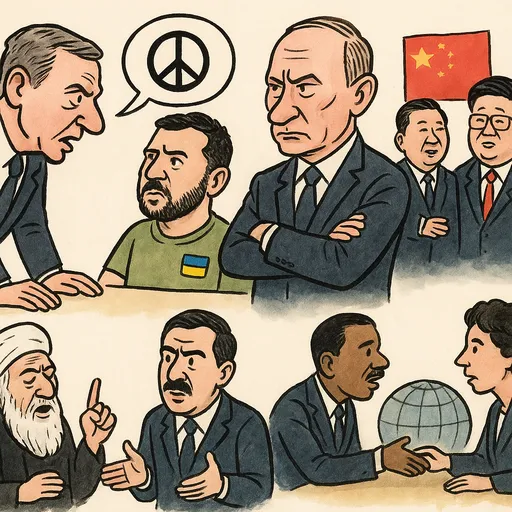
Leaders and diplomats across regions are intensifying efforts to open or shape talks: European capitals and President Zelensky pushed for direct Ukraine–Russia dialogue and published conditions for a just peace while NATO and Western allies signalled readiness to back Kyiv. Moscow has publicly rejected or postponed direct meetings, setting conditions and offering guarded messaging that keeps negotiations uncertain. At the same time China has re-engaged in visible, high-level diplomacy with North Korea, underscoring Beijing’s regional influence and shifting East Asian alignments. In the Middle East, religious leaders, regional powers and the UN urged restraint as ceasefire diplomacy and mediation efforts continue, while Pakistan and Iran exchanged messages through intermediaries. Across the globe cultural, bilateral and multilateral forums continued to promote dialogue and soft-power engagement even as geopolitical analysis warned that escalation dynamics complicate pathways to negotiated settlements.
European leaders and Ukraine are united in urging direct talks with Russia and have framed a set of conditions for any just and lasting peace; Western capitals portray negotiations as the primary diplomatic avenue while stressing security guarantees. Kyiv has also pursued private mediation channels and public appeals, signalling persistent diplomatic activism despite limited progress.
Russian official messaging emphasizes rejection or postponement of direct meetings with Kyiv and stresses preconditions, projecting skepticism about immediate negotiated outcomes. Kremlin-aligned and regional reports reflect a cautious posture that complicates prospects for a breakthrough.
Beijing’s high-profile diplomatic outreach to Pyongyang — including President Xi’s rare visit and public calls for multipolarity — signals an effort to shore up influence on the Korean Peninsula and shape regional security dynamics. Coverage frames China’s moves as strategic, aimed at strengthening bilateral ties and positioning Beijing as a central broker in Northeast Asia.
Religious leaders, regional capitals and international bodies urged restraint amid flare-ups, seeking to keep diplomatic channels open while hosting ceasefire talks and condemning violence. Several states and mediators engaged in shuttle diplomacy and bilateral contacts to prevent escalation and support negotiated pauses.
Pakistan and Iranian officials used back-channel and formal contacts to convey messages and manage bilateral and regional tensions, reflecting Islamabad’s mediator role in certain regional disputes. Meetings and message deliveries point to ongoing, discreet diplomacy aimed at de‑escalation and managing security concerns.
A steady stream of cultural forums, bilateral condolences and multilateral meetings highlighted the continued use of soft-power and people‑to‑people diplomacy to sustain ties and build goodwill. Events ranged from media and cultural summits to development and education advocacy, underscoring non‑military tracks of engagement.
Analytical pieces and contested reports explored the tension between pursuing peace and the logic of escalation, and highlighted disputes over information and alleged operations that affect regional alignments. Such analyses and rebuttals shape public understanding and diplomatic narratives.
Leaders used speeches and domestic policy proposals to project alternatives on the global stage—ranging from economic paradigm shifts to strategic positioning—signalling how internal agendas may influence international cooperation. These statements feed into broader debates about global governance and crisis resilience.
Some leaders explicitly addressed neighbouring populations and governments with assertive public messaging, aiming to shape regional perceptions and domestic legitimacy. Those statements reflect an attempt to influence both domestic audiences and foreign publics.
International institutions and regional partners continue to coordinate on peacekeeping and security in fragile contexts, bringing Somalia and related African security issues to global fora. The coverage stresses requirements for political and humanitarian engagement alongside security measures.