
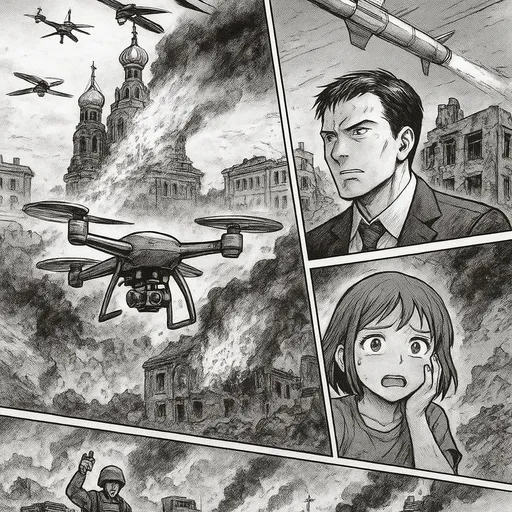
Reporting across sources shows a sharp intensification of drone and missile activity, notably multiple large-scale drone strikes on St. Petersburg timed with major events and claims of hundreds of UAVs intercepted by Russian air defenses. Kyiv and allied outlets describe targeted operations against Russian logistics, oil and transport infrastructure — including gains in control of supply routes into occupied Crimea — while Moscow frames the events as unprecedented attacks and doubles down on a refusal to negotiate. The fighting is inflicting civilian harm and infrastructure damage on both sides, with reports of casualties, injured children, attacks on rescue vessels and worries about incidents near the Zaporizhzhia nuclear plant. NATO and Western analysts are responding with reinforcements, warnings about a more dangerous phase and scrutiny of sanctions evasion and wider geopolitical implications.
Russian state sources and pro‑Moscow outlets emphasise strikes on Russian territory, large numbers of intercepted drones and the need for heightened air‑defence readiness. Kremlin statements stress that negotiations are premature or pointless, present the attacks as unprecedented security threats, and domestic media amplify hardline rhetoric and calls for defensive or retaliatory measures.
Ukrainian sources and sympathetic outlets highlight offensive operations inside Russian territory — especially drone strikes on St. Petersburg and attacks on logistics and energy infrastructure — framing these as strategic responses to Moscow's posture. Kyiv and its supporters also emphasise tactical gains (air control over routes to Crimea) and use the strikes to pressure Kremlin politics while signalling willingness to pursue diplomacy on specific terms.
Western and neutral analysts emphasise the strategic implications: NATO reinforcements to northern and Baltic flanks, lessons for European defence and concerns about sanctions evasion and oligarch behaviour. These sources warn of a darker, more dangerous phase of the war, note internal political strains in Russia, and highlight risks of further escalation including scenarios discussed by experts about nuclear rhetoric and doctrine.
A wide set of reports document civilian suffering and damage to critical infrastructure: children and other non‑combatants injured or killed, forensic teams identifying war victims, attacks on civilian and rescue vessels in the Black Sea, and damage to transport and energy lines. International bodies and observers also flag incidents near the Zaporizhzhia nuclear power plant, underlining acute humanitarian and radiological safety risks amid ongoing operations.
Regional outlets and neighbours stress the danger of spillover effects, pointing to Belarusian territory being used in strike trajectories and warning that cross‑border actions could destabilise adjacent states. These accounts frame the conflict as a regional security challenge that forces nearby countries to reassess posture and readiness.