
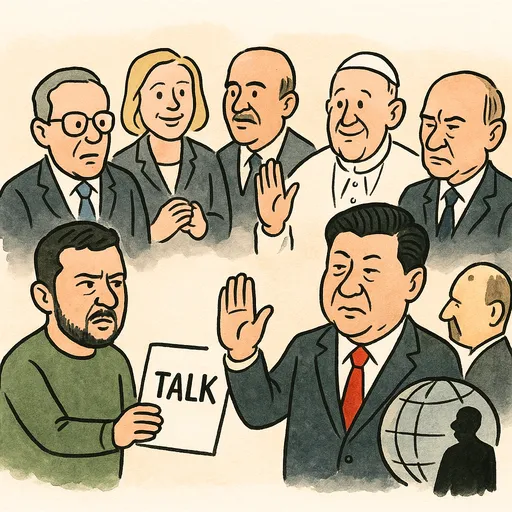
World leaders and influential figures are intensifying diplomatic outreach even as many negotiations remain stalled. Ukrainian President Volodymyr Zelensky has issued repeated public invitations for face‑to‑face talks and sought European backing, prompting coordinated Western meetings and praise from allies. Russia has mixed private engagements with Western interlocutors while publicly rejecting direct talks with Kyiv, underscoring a persistent diplomatic impasse. China’s rare high‑level contacts with North Korea and regional mediations in the Middle East and Africa reflect active great‑power engagement, while the Pope and regional organizations urge de‑escalation, dialogue and an end to polarisation. Multilateral forums and smaller states continue to pursue institutional channels—from the SCO to UN elections—to shape outcomes amid rising security and economic tensions.
From Kyiv’s perspective, direct leader‑level talks are the priority: Zelensky’s open letters and public appeals press for face‑to‑face negotiations and European involvement, while Western leaders organise meetings to coordinate support. This viewpoint frames diplomacy as urgent and central to ending the war, calling on allies to accompany any settlement efforts.
Russian sources emphasise selective outreach and strategic positioning—private meetings with Western figures and messaging about openness to partnership—while publicly rejecting immediate talks with Ukraine’s president. The stance frames diplomacy on Moscow’s terms and signals conditions for any future high‑level engagement.
Beijing’s rare, high‑profile contacts with Pyongyang signal an intent to stabilise regional dynamics and to project influence in Northeast Asia. The visits are presented as carefully managed bilateral diplomacy with potential implications for denuclearisation dialogues and wider regional signalling.
The Vatican frames its engagement as moral and conciliatory, urging world leaders and citizens to end polarising narratives, pursue dialogue and protect vulnerable populations amid multiple conflicts. Papal visits and speeches are positioned as a soft‑power push for reconciliation and humanitarian concern across conflicts and domestic divides.
Regional actors and mediators present active negotiation efforts—Hamas‑led talks in Cairo, Israel‑Lebanon border discussions, and public Iranian statements—while warnings and condemnations show tensions complicating ceasefire and settlement efforts. This viewpoint emphasises fragile, multi‑track diplomacy with significant mediation but limited breakthroughs.
Smaller states and regional bodies stress institutional engagement and cooperative mechanisms—from SCO security talks and Pakistan’s mediatory dispatches to Russia‑Africa outreach, Kyrgyzstan’s UN Security Council seat and Pacific leaders’ calls on ocean management. These actors view multilateral formats as essential channels to address security, economic and environmental challenges.
Coverage of former US leader engagements and envoy meetings frames an approach of direct, high‑stakes diplomacy involving major strategic topics such as China relations, nuclear capitals and close bilateral ties. These reports underline a personalized, transactional strand of diplomacy with implications for broader security discussions.
Defence ministers and regional leaders emphasise deterrence and cooperation in response to perceived threats, critiquing rival military postures and advancing security partnerships. This perspective foregrounds military readiness, alliance coordination and Indo‑Pacific strategic planning as core diplomatic themes.
Coverage of Armenia and neighbouring states frames elections as pivotal tests between Western integration and Russian influence, with campaigns and Kremlin pressure shaping foreign‑policy orientation. Observers view electoral outcomes as determinants of future regional alignment and security arrangements.
Isolated events—from an airport confrontation over security details to critiques of national influence at the United Nations—highlight how protocol breaches and institutional limits can become diplomatic flashpoints. These stories underscore reputational and procedural strains in bilateral and multilateral diplomacy.