
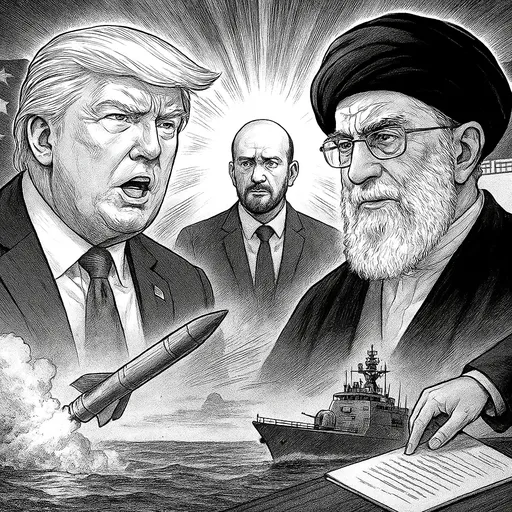
Coverage shows a tense mix of diplomacy and coercion between Washington and Tehran. Iranian leaders and advisers repeatedly say any agreement hinges on the release of roughly $24 billion in frozen assets and warn of wider war or military options if talks fail. President Trump says he is in contact with Iran, signals willingness to meet the supreme leader and at times expresses optimism that negotiations could bear fruit, while also making hawkish claims about Iran’s remaining missile stock. At the same time, strikes, maritime incidents and IAEA inspections continue, and the U.S. Congress has moved to constrain executive war powers, reflecting domestic pushback against military escalation.
Iranian officials and advisers frame any deal as contingent on Washington releasing roughly $24 billion in frozen assets and repeatedly warn that stalled talks could lead to wider conflict or military responses. Tehran emphasizes sanctions relief and economic leverage as the central bargaining chip while signalling distrust of U.S. intentions.
President Trump and White House officials offer mixed signals: they say they remain in contact with Iran, express willingness to meet Iran's supreme leader if it helps secure peace, and suggest talks could produce results soon, while maintaining hawkish rhetoric and public estimates of Iran's diminished missile inventory. The administration pairs diplomatic openings and soft gestures (e.g., visas) with tough posturing and warnings.
Members of the U.S. Congress across parties have pushed back on unchecked executive military authority, passing resolutions and bills to limit or end U.S. military engagement with Iran and signal a legislative check on administration policy. Some lawmakers also tie any sanctions relief to verifiable Iranian steps on its nuclear program.
Despite diplomatic contacts, U.S. and Iranian forces have exchanged strikes, drone incidents and maritime confrontations, while international bodies such as the IAEA and diplomats raise questions about Iran's nuclear materials and compliance. The continuing kinetic incidents and disputed battlefield claims underscore how quickly diplomacy can be overshadowed by military escalation.
Regional leaders and analysts warn that Iran leverages influence in states like Lebanon as bargaining chips and that wider strategic dynamics — including other powers’ roles — shape the limits of U.S. policy. Commentators note the diplomatic tightrope between containment, negotiation and the risk of broader regional escalation.