
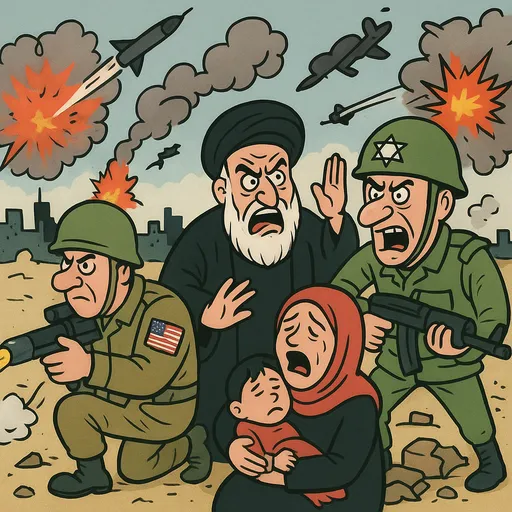
Fighting expanded across the Gulf and Levant as strikes, interceptions and missile salvos between the United States and Iran provoked attacks on Gulf states and repeated Israeli–Lebanese exchanges. Kuwait and Bahrain faced missile and drone strikes and airport and civilian disruptions while U.S. forces reported shooting down drones and hitting Iranian radar sites in what they called defensive actions. Lebanon and Hezbollah rejected ceasefire terms amid renewed Israeli bombardments that have caused heavy civilian casualties and displacement, and MSF warned of destroyed essential services. Palestinian health authorities and local reporters documented a rising humanitarian toll in Gaza and the West Bank, prompting UN appeals and emergency diplomatic activity as analysts warn the confrontation risks wider regional spillover.
Reports in this group present U.S. and allied actions as defensive responses to Iranian missile and drone launches, emphasizing shoot-downs, interceptions and strikes on Iranian radar and military sites. Official statements and military assessments dominate the narrative, stressing disruption of threats and the rationale for U.S. operations while warning of escalation risks.
These pieces convey Tehran's posture of retaliation, deterrence and regional support for allied groups, reporting missile launches, claims of strikes or warnings to U.S. vessels and renewed rhetoric from Iranian leaders. Coverage emphasizes Iran’s framing of actions as responses to U.S. attacks and as defence of regional interests, and highlights Tehran’s backing for proxies such as Hezbollah.
Coverage from Lebanon-focused sources stresses local political fault-lines, Hezbollah’s rejection of ceasefires and Lebanese leaders’ criticism of Iranian influence, while documenting Israeli strikes, displacement and civilian harm. The narrative foregrounds humanitarian impact, state-versus-militia tensions in Beirut, and scepticism about U.S.-brokered deals or military solutions.
Local Gulf reporting highlights attacks on civilian infrastructure and populations — including strikes and drone impacts at Kuwait’s airport, air-raid sirens in Bahrain, missile/drone interceptions and injuries — stressing immediate security and humanitarian effects. The accounts focus on disrupted travel, casualties and heightened defensive postures by Gulf authorities.
Articles in this group document the growing civilian toll in Gaza and the West Bank — including infant and child deaths, rising casualty tallies and daily civilian threats — and call for humanitarian relief and protection for civilians. Voices include local health authorities, victim accounts and human-interest testimony that emphasize the human cost of the broader regional confrontation.
This set centers on UN action, emergency diplomacy and analytical coverage that frames the situation as a fragile, multi-front crisis with high risk of spillover and global consequences. Reports note UN emergency sessions, appeals for aid, commentary on strategic implications and call for de-escalation while monitoring developments across the Strait of Hormuz and the Levant.