
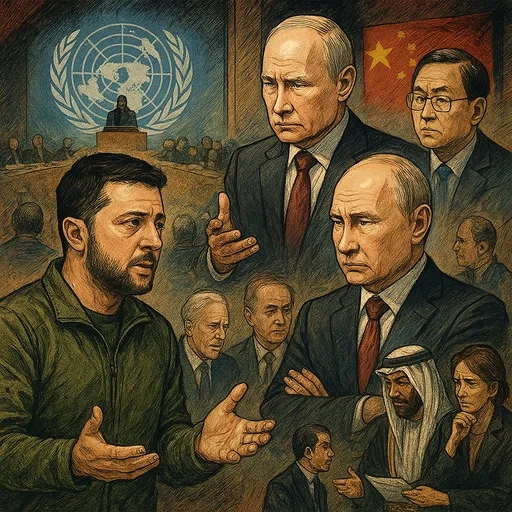
Leaders and states are actively engaging in bilateral and multilateral diplomacy, but talks are uneven: Ukrainian President Volodymyr Zelensky has repeatedly proposed direct, face-to-face meetings with Russian President Vladimir Putin and published open letters seeking a ceasefire, while Moscow has largely rejected those proposals or set preconditions. Western leaders have rallied to support Kyiv and are coordinating meetings with Zelensky even as they explore channels to engage Moscow. Meanwhile China is pursuing high-profile proximity diplomacy through an uncommon visit to North Korea, and regional actors across the Middle East and Gulf continue shuttle diplomacy around ceasefires, Palestinian statehood and security incidents. Multilateral forums and elections (UN Security Council seats, regional summits and mediation efforts including Belarus and other intermediaries) and expert commentary underscore both persistent diplomatic activity and the fragility of prospects for negotiated settlements.
Russia signals reluctance to hold direct talks on Kyiv’s terms while continuing selective high-level outreach; Moscow frames meetings as pointless without pre-agreed conditions and criticises Western influence. At the same time Russia pursues alternative diplomatic channels and meetings with European interlocutors and proposes conditional or venue-specific talks, indicating a calibrated approach to engagement rather than outright isolation.
Ukraine, led by President Zelensky, is making high-profile appeals for a personal meeting with Putin and a ceasefire, using open letters and public diplomatic initiatives to pressure negotiators and mobilise European support. Kyiv portrays Moscow’s refusals as a choice for continued war and seeks to internationalise mediation venues and involve neutral hosts.
European and allied leaders publicly back Ukraine’s initiative for dialogue while coordinating security and diplomatic support; they frame engagement with Kyiv as a priority and plan to meet Zelensky to align policy and pressure Moscow. Western actors also discuss possible channels to engage or incentivise Russian participation in talks.
Beijing is pursuing visible high-level engagement with Pyongyang through a rare Xi Jinping visit, signalling tightened China–North Korea ties and a desire to shape regional security dynamics. Observers see the trip as both bilateral diplomacy and a broader strategic message about China’s regional influence and interactions with other powers, including Russia.
Regional governments, non-state actors and Gulf states are deeply engaged in negotiations and public positioning over ceasefires, Palestinian statehood and Lebanon, with actors alternately rejecting proposals, calling for withdrawals or offering conditional steps. Gulf states and regional capitals condemn attacks and press for restraint even as external powers and militias shape diplomatic outcomes.
Belarus appears repeatedly as a corridor and intermediary in exchanges between Moscow and Kyiv, hosting or facilitating prisoner swaps and being explicitly referenced in diplomatic communications. Coverage emphasises Belarus’s complex role: practical mediator in specific exchanges while also raising accountability and geopolitical questions about its ties to Russia.
UN bodies, Security Council elections and broader multilateral consultations remain central venues for states to shape diplomatic influence and security governance, with countries campaigning for seats and leaders engaging in coalition-building. These processes coexist with specialized consultations on Sudan, nuclear issues and diplomatic candidacies that reflect shifting global alignments.
Leaders convene at summits and bilateral meetings across regions—Caribbean, Pacific, Balkans, Central Asia and South Asia—to advance economic, security and environmental agendas, demonstrating active diplomacy beyond crisis hotspots. These gatherings consolidate partnerships, surface small-state priorities (e.g., ocean management) and keep open lines for cooperation and mediation.
Analysts and commentators interpret letters, summit visits and bids for influence as strategically timed moves meant to signal intent, pressure opponents or reposition states in a volatile environment. Commentary ranges from readings of Zelensky’s mix of provocation and outreach to broader geopolitical risk assessments and criticisms of major powers' foreign policies.