
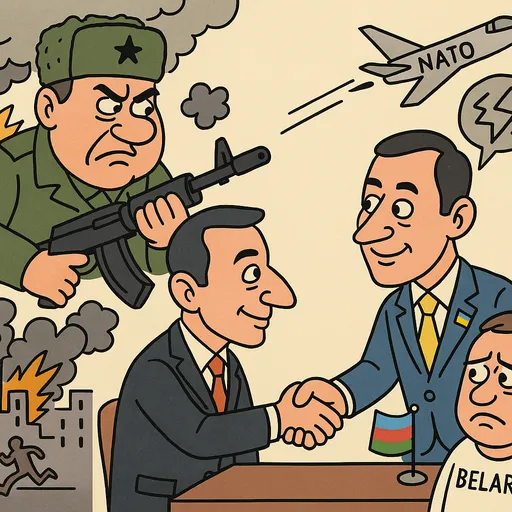
Reports across sources describe intense Russian strikes that continue to inflict civilian casualties in cities such as Dnipro and to spill over into neighbouring states and Russian regions. Simultaneously, Kyiv is pursuing diplomacy — offering talks in Azerbaijan, signing bilateral deals and engaging in prisoner swaps — while Western states maintain sanctions and air-policing responses. Regional neighbours and NATO partners report security incidents (drone debris, airspace violations, cyberattacks) and lodge diplomatic protests, underscoring wider instability. Commentators and organisations highlight broader consequences: political and economic strains inside Russia, questions over Belarus’s role, and continuing humanitarian concerns that drive calls for negotiated outcomes.
Belarusian reports emphasize the human cost of Russian strikes while also covering European Union measures aimed at pressuring Moscow. The coverage links battlefield violence with broader diplomatic responses and potential effects on Belarus and its allies.
Latvian reporting highlights diplomatic tensions after Russian envoys defended Kremlin-aligned media figures who insulted EU leaders, framing it as part of Moscow's confrontational information tactics. The piece points to strained relations between Russia and European governments.
Austrian coverage raises concerns about suspected Russian cyber operations targeting German MPs alongside frontline human stories from Ukrainian soldiers. The perspective mixes alarm about external interference with granular reporting on the realities faced by troops.
Egyptian pieces underline Ukraine's manpower and morale challenges on extended deployments while amplifying Kyiv's plea that diplomacy cannot wait. The reporting stresses both battlefield fatigue and the urgency of international diplomatic engagement.
Coverage from Greenland relays Amnesty International's critique that major leaders seek to reshape the global order, placing the Ukraine war in a wider geopolitical and human-rights context. The piece frames Moscow's actions as part of broader international risk.
Swedish analysis examines whether Belarus might take a larger part in the conflict while expressing skepticism about its capacity to do so. The focus is on regional security implications and Moscow's influence over Minsk.
Reporting from North Macedonia highlights President Zelensky's openness to peace talks held in Azerbaijan, presenting Ukraine as willing to engage diplomatically despite ongoing fighting. The account frames this as part of active negotiation efforts.
The Pakistani piece covers RAF Typhoons scrambled in Romania and clarifies that no Russian drones were shot down, stressing allied readiness and cautious official messaging. The report underscores NATO air-defence posture near the conflict.
Jamaican coverage highlights high-profile calls for ending the conflict, conveying global humanitarian concern and moral appeals for peace. The emphasis is on awareness-raising rather than operational detail.
The Vatican-focused article reports on a large, reciprocal prisoner exchange as a humanitarian measure amid hostilities, framing it as a rare cooperative step. The piece stresses the exchange's role in easing human suffering despite ongoing war.
Czech coverage documents spillover incidents such as drone fragments found in Romania, Ukrainian strikes reaching Russian territory, and Kyiv's defence and energy pacts with Azerbaijan. The perspective links operational developments with diplomatic and security consequences.
Timor-Leste's report focuses on civilian casualties in Dnipro after prolonged attacks, underscoring the humanitarian cost of sustained bombardment. The piece highlights casualty figures and the duration of strikes.
Hungarian pieces scrutinize the Baku peace summit's credibility, report alleged supply and cover-ups on the Ukrainian front, and chart shifts in Kremlin rhetoric tied to missile attacks. The coverage mixes diplomatic scepticism with scrutiny of military accountability.
Irish reporting centers on Russian attacks that killed and wounded civilians, emphasizing the human-rights and humanitarian dimensions. The narrative condemns the violence and spotlights emergency responses.
Georgian coverage focuses on allegations of spying linked to Russia and how pro-government outlets frame the case, highlighting the information and security contests tied to the war. The piece signals internal security concerns and media framing.
Estonian reporting relays Ukrainian intelligence claims about Russian command failures and publishes Kyiv's readiness to negotiate, combining security intelligence with diplomatic signalling. The tone supports Ukraine's perspective while noting operational allegations against Russia.
Lithuanian pieces report on Russia's economic deterioration and highlight stories of Ukrainian officers whose records reveal strains in Kyiv’s defenses. The perspective ties domestic Russian pressures to battlefield consequences for Ukraine.
Mexican coverage conveys Zelensky's readiness for trilateral negotiations with Russia and the EU in Azerbaijan, framing it as an active diplomatic initiative conditioned on Moscow's consent. The article presents diplomacy as the immediate path forward.
Norwegian reporting relays Russian authorities' claim of casualties after a Ukrainian drone strike in Crimea, noting the lack of Kyiv confirmation. The account reflects concern over incidents in annexed territories and their contested narratives.
Icelandic analysis alleges Kremlin attempts to hide the scale of its military preparations, linking secrecy to wider regional instability. The piece emphasizes transparency and intelligence concerns.
Montenegrin reporting covers high-level Russian parliamentary visits to North Korea and Romania's discovery of drone fragments, pointing to Moscow's external outreach and regional spillover. The pieces underline geopolitical linkages beyond the front line.
New Zealand reporting describes UK fighter jets scrambled from a Romanian base following Russian drone activity, highlighting allied air responses without engagement. The focus is on deterrence and readiness measures in Eastern Europe.
U.S. coverage reports heavy Russian strikes on Dnipro that killed and wounded civilians while noting cross-border effects. The piece emphasizes the intensity of Russian attacks and emergency coordination.
Italian live updates mix Zelensky's willingness to negotiate in Azerbaijan with reporting on fresh Russian drone attacks and prisoner exchanges, offering a running picture of diplomacy amid ongoing violence. The approach balances battlefield updates and negotiation prospects.
French journalism reports civilian deaths from Russian drone strikes in Dnipro and Ukrainian strikes in Crimea, underscoring reciprocal escalations and the human toll. The coverage highlights both front-line and annexed-region violence.
Azerbaijani accounts publicise Zelensky's visit and presidential promotion of the engagement, framing Baku as a venue for diplomatic traction and bilateral cooperation. The reporting emphasises Azerbaijan’s role as a prospective mediator and partner.
Gabonese reporting uses the death of an international student to illustrate alleged Russian methods and the conflict’s impact on foreigners in Ukraine. The piece highlights humanitarian and ethical concerns about wartime conduct.
Macedonian coverage reports multiple Russian strikes killing civilians across Ukraine, with particular focus on Dnipro, presenting the ongoing bombardments as a national tragedy. The tone is one of condemnation and concern for civilians.
Slovak reporting weighs whether Russia may reintroduce mobilization and documents Ukrainian drone strikes reaching the Urals, tying internal Russian politics to widening operational reach. The pieces highlight both policy dilemmas in Moscow and conflict spillover.
Aruban reporting notes a reciprocal prisoner exchange between Russia and Ukraine as a humanitarian step amid conflict, portraying it as a limited confidence-building measure. The piece emphasises the human dimension of negotiations.
Saudi coverage conveys Zelensky’s readiness for trilateral talks in Azerbaijan while also reporting Russian battlefield claims such as village captures, presenting both diplomatic outreach and contested military assertions. The perspective juxtaposes negotiation offers with ongoing combat updates.
Reporting from the Isle of Man documents a major Russian drone attack with multiple fatalities and the deployment of RAF Typhoons over Romania, highlighting the link between battlefield events and NATO responses. The focus is on security escalation and allied deterrence.
Congolese reporting highlights Russian strikes in Dnipro that caused deaths and many injuries, stressing the human cost and emergency responses. The piece frames the attacks as emblematic of the conflict's civilian toll.
Romanian outlets concentrate on finding drone fragments after attacks on Ukraine, summoning the Russian ambassador and issuing firm diplomatic protests, reflecting deep concern over violations of Romanian airspace and regional security. Coverage is strongly critical of Moscow’s actions.
Moldovan reporting covers Kyiv’s plans to support Dnipro after major attacks and Zelensky's proposal that Azerbaijan host further talks, emphasizing humanitarian relief and diplomatic maneuvering. The coverage connects domestic assistance to broader negotiation efforts.