
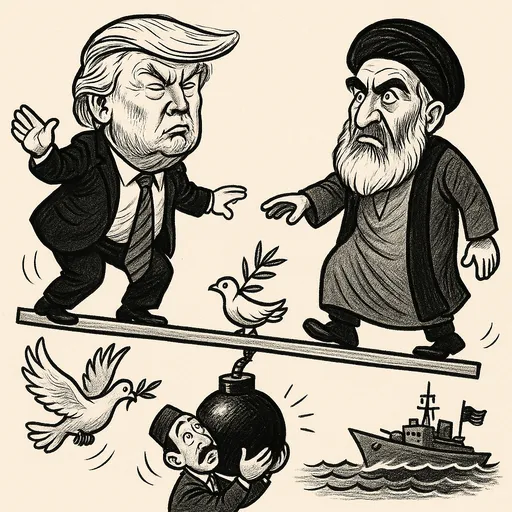
President Trump says he remains in contact with Tehran and repeatedly frames recent Iranian offers as improved yet insufficient, while alternately canceling envoy trips and extending or suspending ceasefires. Iran publicly questions U.S. seriousness, conditions talks on measures like lifting maritime blockades, and has routed responses and envoys through regional hosts. Pakistan, Egypt, Oman and other third parties have tried to mediate by hosting envoys and urging resumed dialogue, but mixed signals and departures have repeatedly stalled face‑to‑face meetings. Ongoing maritime interdictions, detentions and a maintained naval blockade add coercive pressure and complicate negotiations, and analysts warn that leadership unpredictability, hardline rhetoric and mutual mistrust make a durable agreement elusive.
The U.S. executive, speaking through President Trump and official statements, portrays negotiations as transactional: offers from Tehran are noted as ‘better’ but repeatedly judged insufficient, prompting cancelled envoy missions and shifts to phone diplomacy. Washington maintains pressure through measures like a naval blockade and detentions while saying it remains open to talks if Iran presents acceptable terms.
Iranian officials publicly question whether the United States is genuinely committed to diplomacy, insist on preconditions such as lifting maritime restrictions, and submit formal responses and proposals through intermediaries. Tehran frames many hurdles as both a matter of domestic consensus and objection to negotiation under coercive measures.
Pakistan, Egypt, Oman and other regional actors have actively sought to host and facilitate U.S.–Iran engagement, urging extensions of truces and shuttle diplomacy to bridge gaps. Third parties including religious and international figures have called for renewed negotiations, but their efforts have been hampered by mixed signals and diplomatic withdrawals.
Commentators and analysts emphasize the fragility of talks, attributing low prospects for a breakthrough to unpredictable leadership, hardline rhetoric, and mutual mistrust; many pieces argue that diplomatic gains can quickly unravel. Opinion and analytical coverage also caution that conventional approaches may be insufficient and that the diplomatic window remains narrow.
Operational reporting highlights that naval and maritime pressure—ship redirections, detentions and interceptions—remains a central tool of U.S. policy, intended to coerce Tehran but also constraining face‑to‑face diplomacy. These security actions reinforce Iran’s complaints about negotiating under pressure and complicate mediators’ efforts to restore trust.