

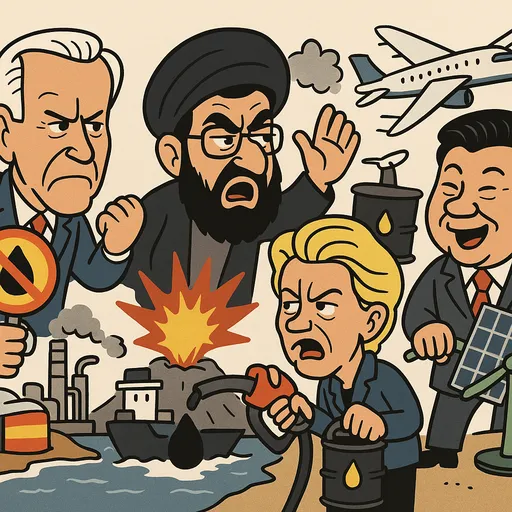
Global energy geopolitics are dominated by Middle East tensions that threaten the Strait of Hormuz and are prompting route shifts, market volatility and emergency policy responses across Asia, Europe and the US. Washington and Brussels are tightening sanction regimes while coordinating on critical minerals, even as some temporary maritime exemptions and reserve releases aim to stabilise supplies. Europe is confronting immediate consumer and aviation pain—fuel relief, rationing contingencies and mass flight cancellations—while Russia–Ukraine energy warfare amplifies infrastructure damage and raises security risks for heating and refining. Simultaneously, China pursues resilience through strategic stockpiles and a rapid renewables build‑out, Africa and the Levant attract renewed investor and regional cooperation attention, and ASEAN states move to safeguard the Malacca chokepoint. Across regions, market shocks, sanctions circumvention and environmental concerns over new resource projects underscore the interdependence of security, trade routes and energy policy.
European governments and businesses highlight immediate consumer and transport impacts from higher fuel prices linked to Middle East tensions, weighing measures from modest relief to fuel rationing. Airlines and travel authorities are cutting short‑haul flights and warning of higher fares as jet fuel becomes scarcer and costlier.
Washington and Brussels are aligning tougher sanctions and adjusting exemptions while deepening cooperation on critical minerals to secure strategic supply chains. Policy moves mix pressure on producers with industrial resilience measures intended to reduce reliance on adversarial sources.
Iranian actions—from mining and interdictions in Hormuz to collecting transit tolls—underscore Tehran's capacity to influence global oil flows and to test international responses, producing regional tension and market spikes. These moves, and associated incidents, drive concerns about maritime access, sanctions evasion and wider economic resilience.
Southeast Asian states are reacting to Gulf instability by reinforcing cooperation to secure the Malacca Strait and rejecting unilateral tolling, while promoting regional stockpiles and contingency plans. The perspective prioritises protecting a vital trade artery and preventing spillovers from distant conflicts.
Moscow frames Western actions as hostile while Russian and Ukrainian strikes on energy infrastructure highlight how energy assets are both strategic targets and sources of leverage. Russian officials warn of retaliatory consequences for sanctions, and European analysts fret about vulnerabilities in district heating and refining capacity.
Kyiv is actively courting partners for security and energy ties—deepening relations with Azerbaijan and Gulf states—as part of efforts to diversify supplies and strengthen defence cooperation. These diplomatic moves reflect Ukraine's strategy to build external resilience amid war and regional energy politics.
Beijing emphasizes long‑term energy security through strategic reserves and an accelerating shift toward renewables, aiming to blunt the impact of external shocks. Chinese policy combines supply‑side safeguards with structural changes to reduce fossil fuel vulnerability.
Shippers and buyers scramble for alternatives—Panama Canal slots surge, Mexico and Japan discuss crude deals, and some nations release reserves—as disruptions and strikes send freight and oil prices higher. The perspective focuses on how route competition and hidden shipments reshape logistics and cost structures.
African states and foreign firms are expanding exploration and bidding for hydrocarbon and uranium projects as global demand and strategic interest grow, while regional cooperation seeks to capture more value. The view stresses both opportunities for development and geopolitical competition for African energy assets.
Local and regional actors raise alarms over deep‑sea mining deals and large oil contracts, emphasising ecological risks and governance gaps in resource projects. These environmental perspectives call for stronger oversight and safeguards amid a rush for critical materials.
Gulf business and political actors warn of economic and security fallout from escalating conflicts and actively seek external political support to stabilise markets. Their stance mixes market pessimism with diplomatic outreach to influence great‑power responses.
Syria, Jordan and Lebanon pursue activation of regional gas infrastructure while Lebanon weighs offshore prospects under geopolitical threat, underscoring attempts to monetise regional gas despite contested maritime realities. The viewpoint highlights local efforts at energy integration amid external pressures.