
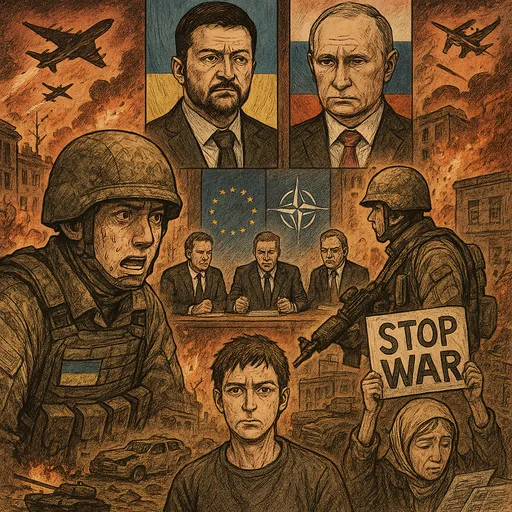
Coverage paints a war of continued high-intensity fighting and tactical strikes that keep inflicting civilian and military casualties, even as limited humanitarian gestures such as prisoner exchanges occur. Western states and NATO are consolidating financial, military and diplomatic support for Kyiv — including a major EU loan, sanctions and readiness measures — while assessing Russian capabilities and threats. Moscow maintains a combative narrative blaming the West and touting alternative operations abroad, even as signs of domestic dissent and cautious official responses appear. Kyiv faces both diplomatic outreach and internal strains, with high-profile visits and awareness campaigns juxtaposed against scandals over troop welfare and supply shortages.
Russian officials and pro-Moscow commentators present a defensive, accusatory framing: they blame NATO and the United States for escalation and justify Moscow’s stance while reacting to growing domestic criticism. Coverage highlights Kremlin messaging, propaganda defenses, and internal political strains that suggest cautious official responses to dissent.
EU and NATO-aligned sources emphasize sustained political, financial and military support for Ukraine, approving major loans and new sanctions while bolstering readiness in the Black Sea and adjacent regions. Reporting focuses on defense upgrades, intelligence assessments of Russian capacity, and the diplomatic coordination behind sanctions and funding packages.
Ukrainian sources and reporting center on active diplomacy, efforts to broaden partnerships, and acute internal challenges on the front: leadership is pursuing international support while confronting scandals over troop welfare and command accountability. Stories stress both Kyiv’s outreach (visits, talks) and the human cost of prolonged deployments and supply shortfalls.
Multiple outlets report reciprocal prisoner-of-war swaps as limited but meaningful steps toward humanitarian relief and ongoing negotiation channels between Moscow and Kyiv. Coverage treats the exchanges as pragmatic measures amid continuing hostilities rather than signals of a broader ceasefire.
News items document continued kinetic operations—missile and drone strikes, targeted raids and inventive battlefield tactics—underscoring persistent danger to civilians and the evolving tactical environment. Reports detail casualties, specific incidents and the tactical use of drones and asymmetric methods by both sides.
High-profile visits, memorials and public installations keep international attention on Ukraine’s humanitarian needs and civilian suffering, combining celebrity diplomacy with advocacy campaigns. Coverage ranges from royal visits to deminers and diplomatic messages to public exhibits and frontline rescues that aim to mobilize public opinion and aid.
Georgian reporting highlights Russia’s continued influence and security entanglements in the South Caucasus, documenting political developments, security incidents and espionage allegations that reflect Moscow’s regional footprint. The perspective stresses local stability risks tied to Russian involvement.
Reports on Russian-backed paramilitary activity in the Sahel portray Moscow as projecting security involvement beyond Europe, conducting operations and hostage releases via affiliated forces. The coverage frames these actions as part of Russia’s broader geopolitical footprint and security partnerships in Africa.
Third-country officials, notably from Türkiye, present themselves as active mediators seeking to restart Russia‑Ukraine talks and facilitate dialogue, positioning their countries as brokers for renewed negotiations. This viewpoint emphasizes diplomatic channels outside the main Western–Russian axis.