
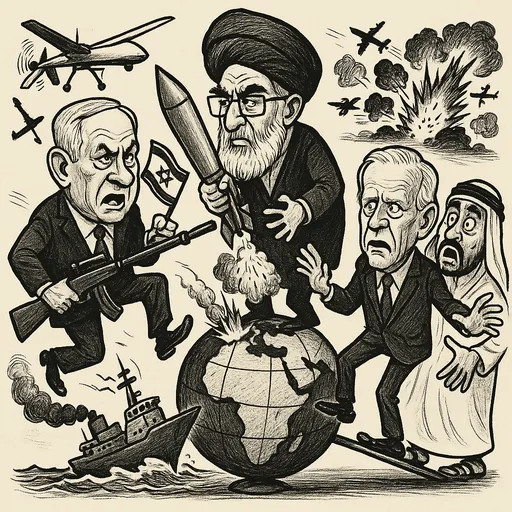
Violence and provocations intensified across multiple fronts: sustained Israeli strikes in Gaza and Lebanon produced civilian casualties and the killing of journalists, while Lebanese resistance groups reported strikes on Israeli forces and downed drones. Iran and allied actors escalated maritime pressure in the Strait of Hormuz with seizures and attacks on merchant shipping, and Tehran-linked rhetoric and reports highlighted growing IRGC influence and expanded missile inventories. International and regional actors signalled a mix of deterrence and diplomacy — U.S. and Israeli readiness for further action contrasted with calls for restraint from Egypt, UAE and the UN, which warned of long-term humanitarian consequences. Repeated ceasefire breaches, allegations of misconduct by soldiers, and cross-border drone incidents underscore the fragility of current arrangements and the high risk of broader miscalculation.
Brazilian outlets report both on the growing influence of Iran's IRGC in Tehran and on allegations of misconduct by Israeli soldiers in Lebanon, treating both as factors that complicate regional stability. Coverage is largely factual and critical, highlighting implications for security and discipline.
The Maltese report highlights an inflammatory act by an Israeli soldier destroying a Christian statue in Lebanon, emphasizing public outrage and the religious sensitivities inflaming tensions. The piece frames the incident as symbolic of heightened cross-border animosities.
This outlet focuses on Iran's seizure of two ships in the Strait of Hormuz, underscoring threats to maritime security and freedom of navigation. The reporting stresses potential international responses and economic fallout.
The coverage relays the Muslim World League’s condemnation of Israeli incursions at Al-Aqsa, framing religious site access as a flashpoint that threatens regional peace. The perspective stresses seriousness of actions around Jerusalem without detailing follow-up measures.
The Indian report relays unconfirmed accounts about heavy injuries to Iran’s supreme leader, presenting it as a factor in Tehran’s political and security dynamics. Coverage frames the account cautiously as a report rather than official confirmation.
Syrian state-linked reporting emphasizes high casualty figures from Israeli attacks, underlining the human cost and ongoing violence on Syrian territory. The piece conveys official domestic impact and criticism of Israeli actions.
Egypt frames itself as a mediator urging restraint, warning that regional escalation must not derail diplomatic efforts for Gaza stabilization. The reporting stresses the importance of keeping diplomacy at the center to protect progress.
This French-source piece highlights provocative calls for extreme measures against Iran, framing such rhetoric as destabilizing and fraught with diplomatic consequence. It presents the assertions as part of broader geopolitical debate.
Armenian outlets relay U.S. reporting that Iran has built hundreds of missiles and regional reporting of a Hamas leader’s death in Tehran, stressing Tehran’s military preparedness and security environment. The perspective links Iranian capabilities to increased escalation risk.
The Ecuadorian piece defends Iran’s posture as resistance to what it calls an imperialist alliance, framing Iranian firmness as strategic autonomy in the face of US–Israel pressure. The article adopts a critical stance toward Western policy.
Macau coverage highlights Israeli declarations of readiness to resume conflict with Iran, stressing the role of U.S. approval and the elevated risk such statements pose to regional stability. The reporting frames the comments as escalation signals.
Qatari outlets concentrate on civilian casualties in Gaza, arrests in the West Bank, and alleged looting and property destruction by Israeli forces in Lebanon, portraying Israeli actions as driver of humanitarian and cross-border crises. The perspective emphasizes victim impact and accountability.
Japanese reporting relays U.S. military claims that Iran attacked multiple merchant ships and captured two, underlining threats to global shipping and regional security. The tone emphasizes intelligence and military briefing sources.
Cypriot coverage highlights Iranian political criticism of Israeli minister Katz, framing the exchange as part of Tehran’s rhetorical pushback against Israeli statements. The piece underscores diplomatic friction and domestic Iranian rhetoric.
Mauritian reporting covers an incident where a container ship was reportedly targeted by Iranian fire off Oman, stressing maritime risk in the Gulf and limited immediate detail on casualties. The account raises regional stability concerns.
The Montenegrin item relays Palestinian health authority figures on fatalities from Israeli strikes in Gaza, emphasizing the humanitarian toll and need for attention to civilian harm. It frames the figures as official medical reporting.
U.S. coverage uses satellite imagery to document the scale of destruction in Lebanon tied to the Gaza conflict, highlighting cross-border consequences and visual evidence of damage. The reporting stresses accountability and humanitarian implications.
Yemeni outlets amplify Lebanese resistance actions, report strikes on Israeli forces, downed drones, and strong statements of solidarity from Houthi leadership and Iranian-aligned commanders promising large missile launches. The perspective is militant and solidaristic toward Lebanon and Palestine while emphasizing deterrence against Israel.
Cameroonian reporting cites Iran’s ambassador noting close contact between Russian and Iranian presidents, framing it as coordination among major non-Western actors since the conflict began. The focus is on diplomatic alignment amid tensions.
Cuban commentary frames the crisis as a global danger driven by misinformation and imperial aggression, warning about the risk of war with Iran and urging peaceful negotiated solutions. The perspective is strongly anti‑imperialist and cautionary.
The Dominican report emphasizes an Israeli strike on Lebanon occurring hours after a reported ceasefire announcement, highlighting perceived inconsistencies and escalation risks. The piece underscores timing as politically significant.
Italian coverage focuses on the killing of a Lebanese journalist and claims that aid was obstructed for hours, framing the event as potentially a crime against humanity and stressing concerns for press safety. The reporting invokes humanitarian and legal accountability angles.
This outlet highlights the UN’s warning that ongoing bombing will jeopardize Gaza’s reconstruction for decades, emphasizing long-term humanitarian and infrastructure consequences. The perspective calls attention to urgent aid and reconstruction planning.
Kuwaiti reporting relays Lebanese leaders’ accusations of war crimes after a journalist’s death and reports of killings in Lebanon and settler violence against Palestinians, stressing official condemnation and calls for accountability. The pieces emphasize the political fallout in Lebanon.
Maldivian coverage provides rapid updates on developments in Gaza and the Israel–Gaza front, noting exchanges, regional reactions, and humanitarian concerns in near–real time. The perspective prioritizes timeliness and situational awareness.
Argentinian outlets offer consolidated war updates and coverage of widening confrontation involving the U.S., Israel and Iran, including diplomatic exchanges and leaders’ statements asserting freedom of action. The reporting aims to summarize key developments and risks.
Jordanian reporting records claims (from former U.S. leadership) that Iran strengthened its arsenal during ceasefires and Israeli notices about missiles intercepted from Lebanon, conveying acute border-security concerns and alarm at rearmament. The perspective stresses immediate security threats.
Serbian sources highlight ominous Iranian adviser rhetoric about imminent upheaval and reports of drones from Iraq striking Kuwaiti border crossings, tying rhetorical escalation to concrete cross‑border incidents. The coverage underscores deterioration of regional order.
Swedish reporting notes new attacks in Lebanon despite a declared ceasefire, underlining the fragility of agreements and the risk to civilians. The perspective emphasizes monitoring and international concern about renewed fighting.
Indonesian reporting focuses on IRGC attacks on cargo ships tied to Israel in the Strait of Hormuz, highlighting the maritime dimension of Iranian retaliation and its impact on global shipping routes. The tone stresses rising danger on vital sea lanes.
German analysis examines how Iran uses asymmetric tactics to outmaneuver U.S. naval power in the Gulf, framing Tehran’s actions as strategic and challenging to conventional dominance. The piece underscores risk of miscalculation.
Malawian reporting highlights the death of Lebanese journalist Amal Khalil in an Israeli airstrike, focusing on press safety and regional outrage. The perspective emphasizes human and professional costs of the conflict.
Portuguese coverage documents mutual accusations of ceasefire violations by Hezbollah and Israel, portraying the ceasefire as effectively undermined and emphasizing reciprocal blame. The piece frames the border as a persistent flashpoint.
Bolivian reporting portrays an Israeli attack that shattered ceasefire expectations and caused heavy casualties, stressing the perception of betrayal and sudden escalation. The coverage is emotive and focused on civilian impact.
Tanzanian reporting discusses Lebanon’s deepening internal divisions and echoes of the civil war, linking domestic fragility to the external security environment. The perspective warns that internal fissures compound regional risks.
Canadian pieces examine the settler movement’s expansionist aims and analyze how both Iran and its adversaries have weaponized the stalemate, warning that hardened positions and domestic politics heighten miscalculation risk. The coverage is analytical and critical of hardline drivers.
Malian reporting highlights an incident of U.S. naval gunfire directed at Iran, noting its rarity and potential to escalate tensions with Tehran. The perspective draws attention to renewed kinetic exchanges between the U.S. and Iran.
Chilean reporting emphasizes reported Palestinian deaths in Gaza despite a truce, underscoring the fragility of ceasefire arrangements and humanitarian consequences. The piece stresses ongoing civilian vulnerability.
Saudi reporting covers attacks by explosive drones from Iraq on Kuwaiti border posts, stressing regional spillover and border-security implications even without casualties. The tone highlights cross-border instability in the Gulf.
Guyanese coverage reports that former U.S. orders directed military forces to engage Iranian small boats, stressing a hardline U.S. posture and the risk of maritime escalation. The piece frames the directive as highly provocative.
Norwegian reporting notes a dozen fatalities in Gaza from Israeli strikes, focusing on casualty reporting and the humanitarian impact amid continued hostilities. The perspective is concise and casualty-focused.
This outlet reports on Iran’s changing battlefield posture and new capabilities, suggesting Tehran may have additional options to influence conflict dynamics. The tone highlights strategic adaptation by Iran.
UAE commentary stresses that neither side wants full-scale war and emphasizes diplomacy’s role in preventing further escalation, reflecting a regional mediating stance. The perspective calls for restraint and dialogue.
Jamaican reporting relays Gaza civil defence figures on fatalities from Israeli strikes, emphasizing the human cost and presenting the data as part of ongoing casualty tallies. The focus is on humanitarian impact.
Polish reporting covers the arrest of a suspect in a Syrian civilian massacre, situating the incident within broader Syrian conflict accountability efforts. The piece looks outward from regional escalation to war-crime investigations.
Vatican reporting relays UN concerns about civilian protection after the deaths of children in Gaza, stressing moral and humanitarian appeals for better protection and access. The perspective is focused on human suffering and moral urgency.
Afghan sources convey Iranian officials’ demand that the U.S. choose between ceasefire or continued war and report on French UN peacekeeper deaths in Lebanon, linking diplomatic ultimatums to the perilous security environment. The cluster highlights both Iranian political pressure and risks to international forces.