

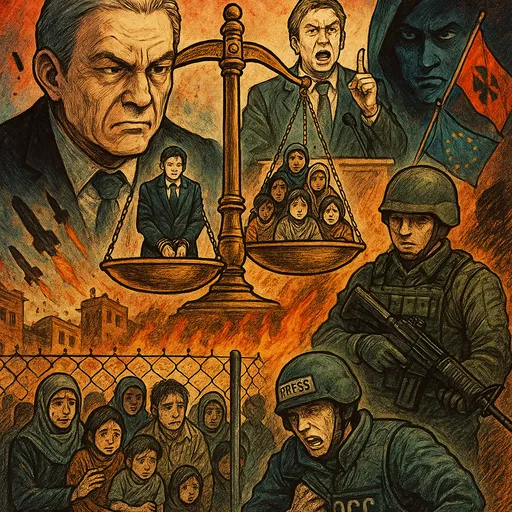
Recent reporting shows a bifurcated global human-rights agenda: growing use of international justice mechanisms and transnational investigations sits alongside urgent calls for humanitarian protection for displaced and vulnerable populations. Courts and international prosecutors pursue high-profile accountability cases while rights groups and multilateral bodies press for protections for children, refugees and conflict-affected civilians. Parallel coverage documents intensifying repression, heavy-handed state responses and threats to journalists and civil society in multiple regions, raising alarm about shrinking civic space. Diplomatic skirmishes and attacks on exiled dissidents underscore risks to diaspora communities and complicate cooperative responses to abuses.
Sources from countries and institutions aligned with international legal mechanisms emphasize accountability through courts, investigations and transnational litigation. The perspective stresses that prosecutions, probes into past atrocities and litigation against states or their proxies are necessary tools to deter future abuses and deliver justice to victims.
Reports originating from humanitarian agencies and regional actors call for coordinated international responses to protect civilians, children and displaced populations. This viewpoint stresses urgency on issues ranging from online child safety and climate-driven displacement to migration governance and protection for persecuted minorities.
Media outlets and rights advocates highlight threats to journalistic independence and civic space, pushing for protections and international scrutiny. This perspective frames awards, open letters and NGO reports as part of broader pressure to defend free expression and hold governments to account for restrictions or abuses.
Reporting from conflict zones and human-rights monitors documents alleged torture, extra-judicial killings, large-scale electoral violence and abuses by state and non-state actors. The shared perspective is that ongoing hostilities and politicized security responses are producing grave rights violations that demand international monitoring and accountability.
Coverage from diplomatic and regional sources emphasizes how attacks on exiles, symbolic provocations and geopolitical rhetoric strain bilateral ties and complicate human-rights diplomacy. This view underscores the need for states to protect exiled dissidents and manage the diplomatic fallout of incendiary acts and leadership rivalry.