
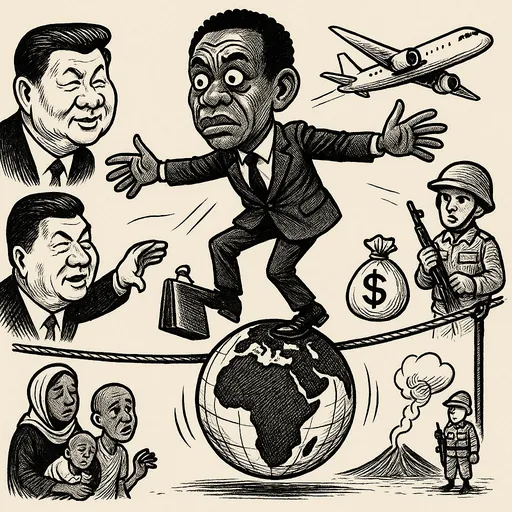
Recent reporting shows African leaders intensifying bilateral and multilateral diplomacy to secure trade, security cooperation, and development partnerships. Several states pursued high-level visits and forum participation—from state visits and air service protocols to business forums and AU‑EU summits—while smaller states advanced diaspora and public diplomacy initiatives. Security and humanitarian strains (refugee returns, coups, health outbreaks and xenophobia) are shaping diplomatic agendas alongside efforts to attract investment and deepen ties with major partners including China, the EU, the US and Middle Eastern states. Geopolitical friction is visible too: pressure around Taiwan’s travel and competing external actors influence how African states manage airspace permissions and international alignments.
Comorian authorities are portraying an active diplomatic push across Africa to strengthen bilateral links, sign air‑services agreements, and secure security cooperation, while domestic actors press the Mayotte issue. Coverage emphasizes state visits and new protocols alongside appeals for regional attention to migration and maritime tragedies.
Reporting highlights the diplomatic fallout when several African states revoked flight permits for Taiwan’s president, a move criticized by the US as influenced by China and that led to a canceled trip. The pieces frame the episode as evidence of external powers’ leverage over African airspace and the sensitivities of cross‑strait diplomacy.
Addis Ababa is emphasizing practical cooperation and investment attraction, from strengthening relations with Djibouti to hosting an Ethio–Czech business forum. The coverage presents Ethiopia as opening opportunities across infrastructure, water, health and defense to expand trade and foreign investment.
CAR’s leadership is using participation in global and continental fora to advocate for peace, stability and a more balanced partnership with the EU. Reporting underscores presidential engagement at the World Government Summit and AU‑EU talks as central to Bangui’s diplomatic strategy.
Guinean reporting mixes security concerns—sightings of political figures in conflict zones—and routine diplomacy such as incoming prime‑ministerial visits and looking to foreign cultural tourism models. The perspective links domestic development ambitions to potential external partnerships, notably with China on tourism and cultural exchange.
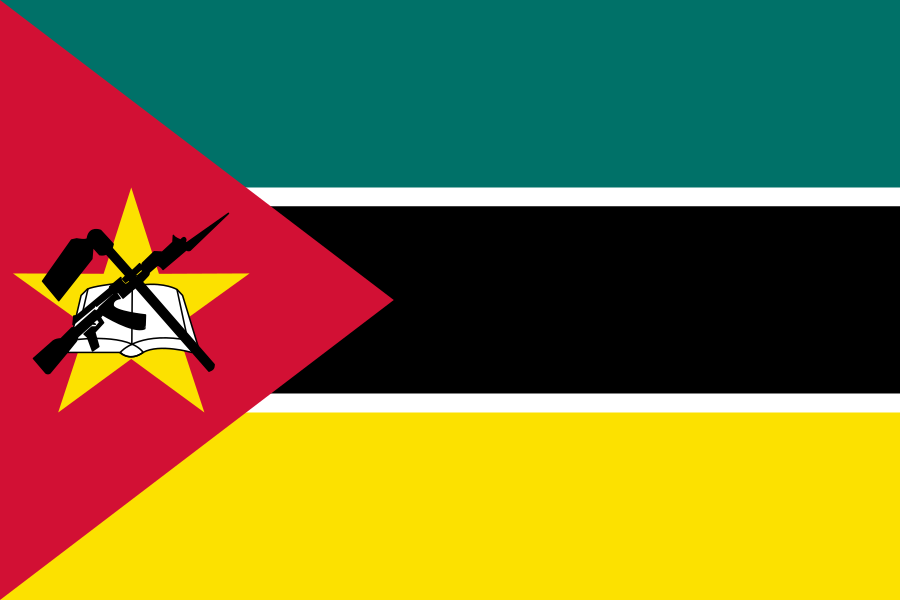
Coverage of the Mozambican presidential state visit to China highlights Beijing’s prominent media framing and the bilateral emphasis on strengthening diplomatic and development ties. The visit is presented as furthering Sino‑Mozambican cooperation on trade and infrastructure.
Togolese reporting frames a growing partnership with Canada as focusing on governance, trade and capacity building, positioning bilateral ties as instrumental to development objectives. The piece emphasizes diplomatic efforts to translate relations into concrete programs.
The coverage of the treason and terrorism charges stemming from a foiled coup plot in Nigeria frames prosecutions as a test of judicial and political responses to threats against the state. The reporting underscores ongoing security and stability challenges with regional implications.
Authorities in Guinea‑Bissau are pursuing international capacity‑building in communications, using a Lisbon visit to reinforce media training and institutional links with Portugal. The angle emphasises practical technical cooperation rather than high politics.
São Tomé’s government presents forthcoming ambassadorial appointments as a means to broaden diplomatic engagement and attract cooperation. The reporting conveys optimism that new envoys will deepen ties with key partners.
Madagascar’s coverage highlights international meetings to attract investment alongside active cultural diplomacy by the US and sensitive accusations about external destabilization. The perspective shows a mix of development outreach and concern over foreign influence, with public diplomacy programmes targeting youth engagement.
Tanzanian reporting emphasizes regional leadership roles through participation in international training and recognition of East African innovation. The pieces frame such engagements as opportunities to share governance practice and attract international support for innovation ecosystems.
Coverage of flights returning Sudanese from Uganda focuses on logistical coordination and ongoing repatriation efforts amid conflict. The reporting underlines humanitarian management and continuing international involvement in facilitating returns.
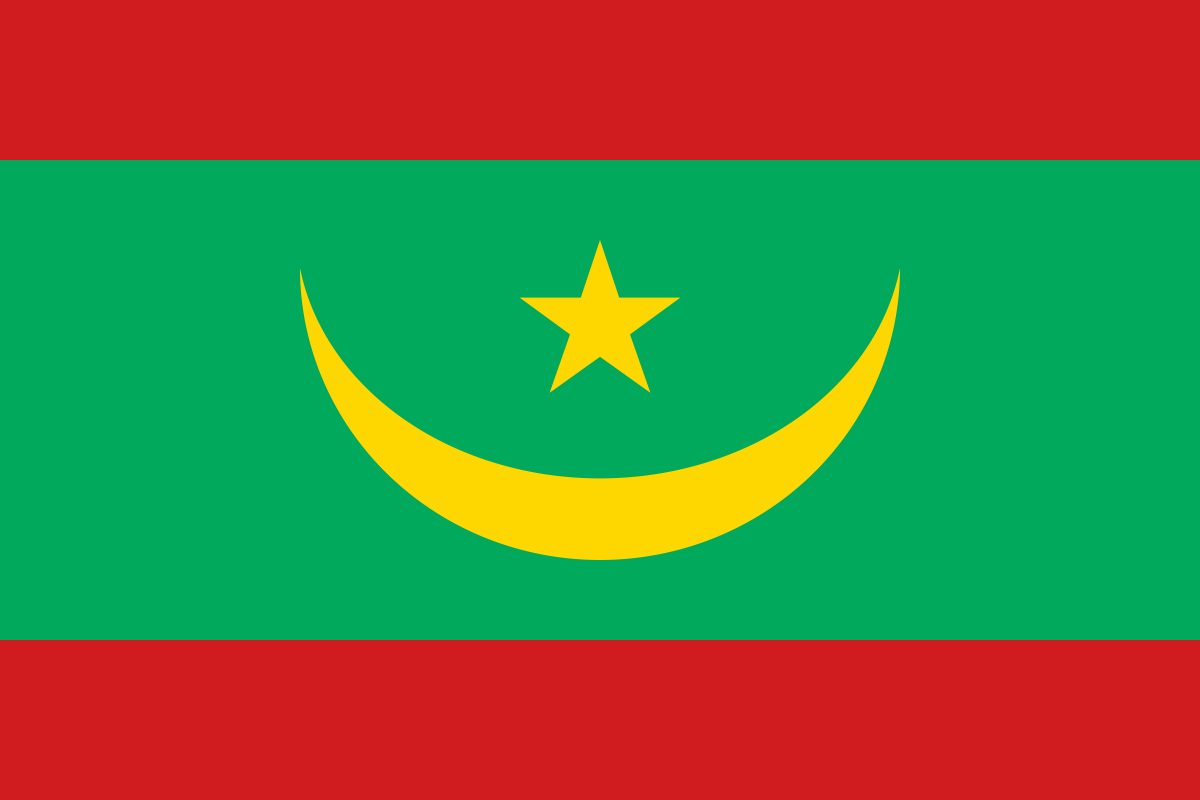
Mauritanian pieces stress the importance of mobilizing the diaspora for national development while underscoring continued EU backing for border security and migration management. The perspective links external security assistance with domestic and diaspora policy goals.
Zimbabwean reporting spotlights accelerating trade with the EU and interest from EU, UK and Kenyan buyers in long‑term horticulture partnerships, framing economic diplomacy as a route to diversify exports. A related legal/diplomatic item on repatriation demonstrates how regional legal processes can have cross‑border diplomatic implications.
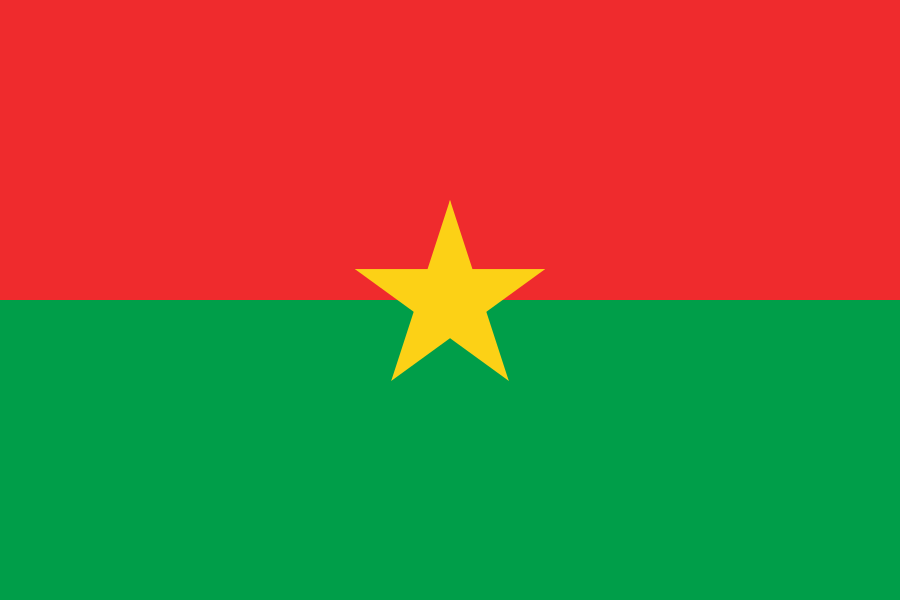
Burkinabè items convey domestic policy and infrastructure developments—from a free train initiative to education language reforms—framed as national initiatives with potential regional relevance. The angle is inward‑facing but relevant to France/ECOWAS area connectivity and human capital.
The reporting from the region registers formal diplomatic protests against xenophobic attacks in South Africa, with Ghana (via the Benin‑coded outlet) summoning the South African envoy. The perspective emphasizes consular protection and regional diplomatic pressure to address migrant abuse.
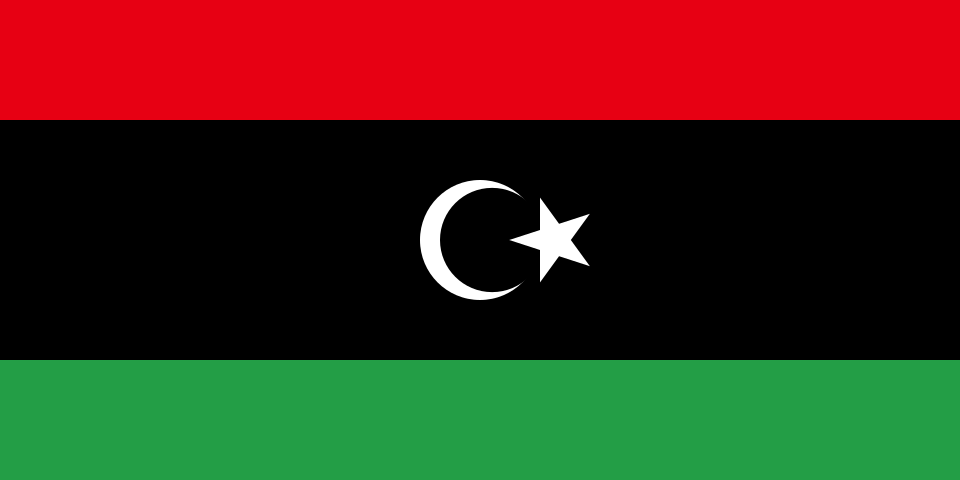
Libyan coverage stresses re‑establishing air links, engaging high‑level Japanese delegations, and coordinating with the UN on upcoming action—framing these as steps to normalize international relations and attract commerce. The stance highlights rebuilding connectivity and leveraging foreign partnerships.
Ivorian reporting celebrates female leadership recognition, notes troop contributions to international security missions, and flags international mediation in Sahel and regional security dynamics. The pieces project Côte d’Ivoire as an active security and diplomatic actor.
Egyptian reporting frames talks with Finland as part of Cairo’s drive to broaden economic cooperation with European partners, signaling an interest in trade, investment and regional collaboration. The perspective stresses pragmatic economic diplomacy.
Coverage of presidential talks and the signing of numerous agreements highlights a concerted effort to revitalize Chad–Algeria bilateral cooperation across economic and security sectors. The angle emphasizes concrete deliverables and regional partnership building.
Somali reporting conveys ambiguity about high‑level trips to the UAE and examines severe pastoral losses at coastal markets, linking diplomatic interactions to domestic political recalibration and acute humanitarian pressures. The pieces suggest external engagement may influence internal political alignments while livelihoods suffer.
International health reporting warns that refugee flows from Sudan are triggering measles and meningitis outbreaks in Chad, stressing the need for more humanitarian funding and vaccination campaigns. The perspective frames regional displacement as a cross‑border public‑health and diplomatic challenge.
Reporting from the Congolese outlet highlights Senegalese leadership at the UN and the continental push for peace, dialogue and development, reflecting an African perspective on multilateral reform and conflict prevention. The angle underscores continental representation in global institutions.
Liberian coverage underscores engagement at the UN, diplomatic talks to resolve foreign troop presence, aviation cooperation with Morocco, and international recognition of its president’s peace leadership. The perspective presents Liberia as a proactive diplomatic actor seeking security guarantees and international partnerships.
Reporting ahead of the Africa Forward Summit frames Kenya and France as plotting strategic, innovation‑led partnerships to boost technology, trade and regional integration across Africa. The piece emphasizes forward‑oriented, high‑impact cooperation.
Local politicians accuse an external broadcaster of denigrating the country’s image, reflecting sensitivity to international media portrayals and the diplomatic repercussions of external coverage. The piece underscores small‑state concerns about narrative and reputation management.