
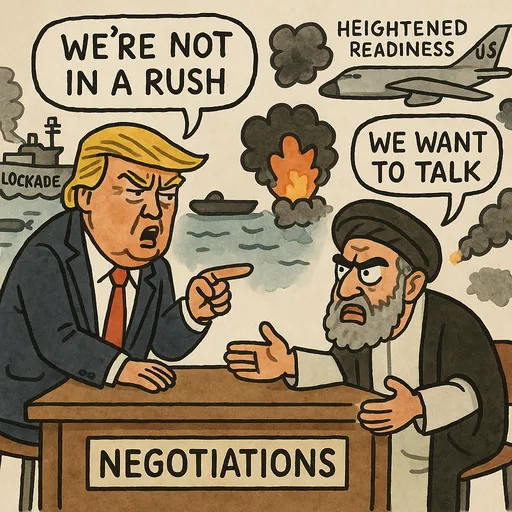
Diplomatic engagement between Washington and Tehran remains active but fragile: U.S. leaders, chiefly President Trump, combine public pressure and threats with repeated assertions that they are 'not in a rush' and are ready to negotiate, while also extending and timing ceasefires tactically. Iran's officials stress sovereignty, insist on their rights in nuclear talks and accuse the U.S. of bad faith, even as Tehran signals willingness to enter renewed discussions and offers proposals. Pakistan and other mediators have sought to broker meetings, but progress is described as weak or faltering and external observers warn mistrust clouds any quick breakthrough. Meanwhile, military posturing — naval blockades, heightened readiness and isolated maritime incidents — keeps the risk of escalation tangible and complicates the fragile diplomatic window.
The U.S. position, as voiced largely by President Trump and U.S. officials, blends strategic patience with coercive leverage: Washington says it is in contact with Iran, claims it can strike a deal when advantageous, and repeatedly insists there is no rush while warning Tehran that 'time is running out'. At the same time the administration signals willingness to use conventional force, maintains blockades, and publicly rules out nuclear options while sometimes endorsing hardline rhetoric.
Iranian officials and domestic actors frame diplomacy through a lens of sovereignty and distrust: Tehran says it seeks its rights, rejects U.S. pressure, and faults Washington for lack of seriousness while at times offering plans or scaled concessions such as reduced enrichment. Internal politics — claims of IRGC interference, statements of unity, and opposition voices abroad — complicate a coherent negotiating posture and feed concerns about how representative proposals might be.
Pakistan and individual mediators have actively sought to bridge Washington and Tehran, brokering ceasefire extensions and shuttle diplomacy, but participants and diplomats describe progress as very weak or faltering. Mediators aim to create negotiating space, yet the combination of domestic pressures on both sides and military posturing limits the prospect of a rapid breakthrough.
Military readiness and maritime measures are central to the coercive dimension of diplomacy: U.S. naval presence, blockades, orders to confront Iranian small boats and reported attacks in the Strait of Hormuz underline a muscle-flexing approach intended to raise costs for Tehran. Those actions sustain leverage but also keep the risk of miscalculation and escalation high, constraining diplomatic maneuvering.
Reports focused on the negotiation timeline describe episodic rounds of intense talks, temporary ceasefires and continued dialogue without decisive agreement: teams have met for long sessions, ceasefires have been extended, and proposals have been exchanged, but progress is described as limited and subject to tight timetables or conditional extensions. Observers stress that these pauses create windows for diplomacy but are fragile and reversible.
Third‑party countries, analysts and regional actors register cautious hope that ceasefires provide openings for negotiation, while warning that mutual distrust, unpredictable leaders and the economic costs of sanctions undercut durable settlements. Commentators also note spillovers into economics and cultural diplomacy (e.g., sports) and flag potential wider consequences if talks fail or rhetoric escalates.