
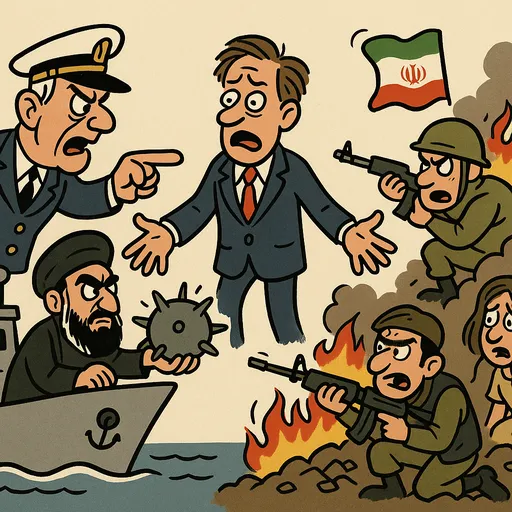
Tensions have intensified on two fronts: a growing U.S.-led maritime confrontation in the Strait of Hormuz with orders to destroy suspected mine-laying vessels and expanded U.S. naval and air deployments, and an unstable Israel–Lebanon front marked by strikes, Hezbollah exchanges and acute civilian harm. Iran and its security organs have pushed back with public footage of maritime seizures, air-defense activations, cyber threats and warnings of heavy retaliation, while reports cite missile stockpiles prepared as deterrence. Washington has acted as mediator, announcing a three-week extension of the Israel–Lebanon ceasefire and hosting direct talks, but the pause remains fragile amid accusations of war crimes and new incidents that risk reigniting hostilities. Regional actors and international observers warn of mounting humanitarian, economic and diplomatic fallout as displacement, cultural ruptures and market disruptions rise alongside the military standoff.
Sources sympathetic to U.S. and Israeli policy emphasize a forward-leaning military posture aimed at denying Iran freedom of action in strategic waterways and degrading hostile capabilities. Reporting highlights presidential orders to destroy mine-laying vessels, carrier and bomber deployments, Pentagon strike planning, and Israeli statements of readiness to resume strikes pending U.S. approval.
Iranian-aligned outlets and reports foreground deterrence and defensive messaging: footage of IRGC maritime actions, activation of air defenses, public warnings of devastating reprisals and reports of prepared missile stocks. The perspective frames Iran’s moves as sovereign responses to external threats and a signal that attacks on Iranian assets would carry heavy costs, including cyber measures against Gulf infrastructure.
Local and regional reporting centers civilian suffering, alleged violations by Israeli forces or settlers, and acts of resistance by Hezbollah and Palestinian groups; incidents such as the killing of journalist Amal Khalil, looting, raids and settler violence are foregrounded and prompt calls for accountability. This viewpoint emphasizes the human cost, violations of humanitarian norms, and the fragility of protections for civilians and aid workers on the ground.
Many outlets report U.S.-brokered efforts to pause hostilities, with repeated announcements that the Israel–Lebanon ceasefire has been extended by three weeks and ongoing Washington talks intended to prevent wider spillover. This perspective stresses diplomacy, the United States’ central mediating role, and the tenuous nature of any pause given continued violations and rhetoric from combatants.
Analytical and international-coverage pieces highlight the broader fallout: large displacement and child casualties in Lebanon, economic and cultural impacts, warnings from Gulf financiers, and diplomatic initiatives from regional states like Egypt to prevent escalation. This viewpoint stresses secondary effects—humanitarian crises, disrupted trade and cultural ties—and calls for de-escalation to avoid wider regional destabilization.