
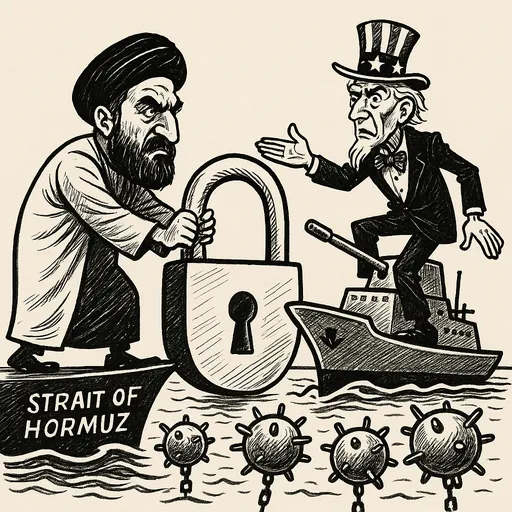
A sustained standoff in the Strait of Hormuz centers on Iran’s refusal to reopen the waterway while it faces a U.S. naval blockade, and on repeated Iranian seizures, interceptions and attacks on commercial shipping. U.S. and Western sources warn of mines and estimate demining could take around six months, while Washington maintains pressure through a maritime blockade and high-profile diplomatic statements. International actors — including the UN, China, Arab states and maritime registries like Panama — urge reopening the strait to protect trade, food security and freedom of navigation. Ongoing footage releases, on-site reporting and seafarer accounts highlight acute safety and commercial risks, and stalled negotiations leave diplomacy struggling to restore predictable transit and calm energy markets.
Articles in this group reflect Tehran’s posture that it will retain control over the Strait and will not reopen it while U.S. naval pressure and port blocks persist; they report Iranian seizures, interceptions, and attacks presented as enforcement actions or responses to the blockade. The viewpoint emphasizes sovereignty, conditionality for any reopening, and use of naval and IRGC measures to assert leverage in negotiations.
This cluster captures U.S. and Western statements stressing maritime security, blockade implementation, and the practical challenge of clearing mines — with officials warning demining could take months and linking persistent pressure to diplomatic leverage. Coverage reflects a securitized approach combining naval operations, public diplomacy and firm negotiation postures from Washington and allied sources.
These items present the perspective of external actors — the UN, China, Arab states, Russia and flag registries like Panama — urging freedom of navigation, urging diplomacy, condemning seizures and warning of legal breaches. The emphasis is on de-escalation, protecting trade (notably food and fertilizer supplies), adherence to maritime law, and multilateral diplomatic engagement to stabilize the chokepoint.
This group compiles frontline reporting and industry-focused coverage highlighting the immediate human, commercial and market effects: seafarers’ fear, live on-site reporting, and concerns about disrupted oil and cargo flows. The viewpoint stresses practical consequences for crews, insurance, shipping schedules and global supply chains, underscoring urgency for a negotiated reopening.
This cluster centers on reporting that diplomatic talks have been delayed or stalled, leaving the Strait’s status unresolved and negotiations under strain. The viewpoint highlights the fragility of ceasefires and the political obstacles preventing a binding settlement that would restore regular transit.