

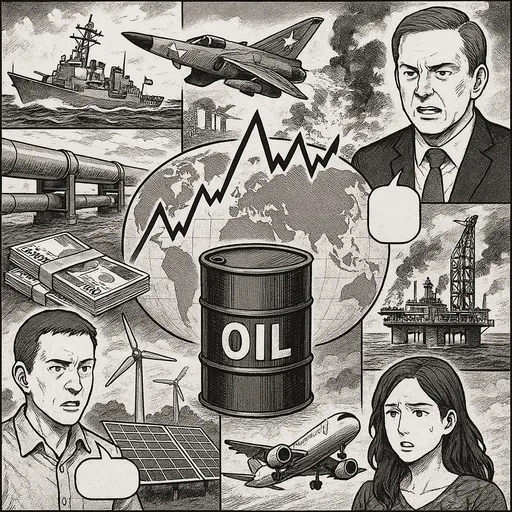
The set of articles centers on an energy system under acute geopolitical stress: Iran‑related naval confrontations and threats to the Strait of Hormuz are driving shipping disruptions, tanker evasions and sharp oil price spikes that ripple into inflation and airline costs. Europe’s energy security and the Russia‑Ukraine conflict feature prominently, with pipeline repairs, EU loan packages and sanctions shaping supply routes and political leverage. Asian actors — especially China and ASEAN states — are accelerating diversification, strategic reserves and renewable capacity while debating the longer‑term financial landscape for oil trade. Across Africa and the Pacific, governments seek investment and greater control over resources even as local communities and island states warn about environmental risks from offshore extraction. Policymakers are responding with a mix of emergency measures, green transition plans and renewed interest in nuclear and other long‑term energy infrastructure to reduce vulnerability to market shocks.
Security‑oriented sources focus on immediate risks from Iran‑related actions around the Strait of Hormuz, highlighting seizures, tankers going dark and the real prospect of prolonged maritime closures. Coverage emphasizes how these disruptions feed volatility in oil benchmarks, push up fuel costs and transmit inflation through importers and industries.
European and Western reporting treats energy as a geopolitical tool: restoring and rerouting pipelines, coordinating large financial packages for Ukraine, and managing sanctions against Russia are presented as central to regional stability. The same viewpoint connects energy shocks to economic fallout — exemplified by airline route cuts and domestic inflation pressures — and stresses the need for coordinated policy responses.
Chinese and broader Asian sources emphasize long‑term resilience: large strategic reserves, rapid renewables build‑out, and debate over the petrodollar signal efforts to decouple from single‑point vulnerabilities. ASEAN and regional actors are simultaneously pursuing cooperative measures like stockpiling and new supply partnerships to hedge against Middle East risks.
Pacific reporting highlights island states feeling blindsided by fuel emergencies and alarmed by foreign seabed mining and mapping activities, which they see as strategic encroachment. Local leaders and civil society call for more engagement, transparency and protection of marine environments and energy access.
African coverage frames energy as both an investment opportunity and a governance challenge: countries are opening bids, hosting investor forums and stressing control over exports while analysts map production concentration and strategic choices. The narrative balances attraction of foreign capital with concerns about smuggling, revenue transparency and regional influence.
Policymakers and commentators in Europe and beyond position the green transition as a strategic response to wartime energy shocks, but finance and political constraints force trade‑offs and recalibrations in consumer subsidies and emergency measures. The pieces reflect a push to accelerate renewables and efficiency while managing short‑term supply and affordability pressures.
Proponents and technical reporting present nuclear projects as a durable element of energy security, from Finland’s deep waste repository to capacity‑building visits and international nuclear events. This perspective frames nuclear as part of diversification and a long‑horizon response to both climate and supply risks.
Business and market coverage highlights how companies and economies adapt: some firms report steady revenues despite volatility, while national economies face delayed recoveries from oil shocks. The viewpoint underscores corporate risk‑management and the uneven economic impact of higher energy costs.
Civil society and local campaigns foreground community and environmental resistance to oil and mining projects, arguing that resource exploitation often proceeds without adequate consent or safeguards. These voices stress rights, accountability and local oversight as essential complements to national investment strategies.