
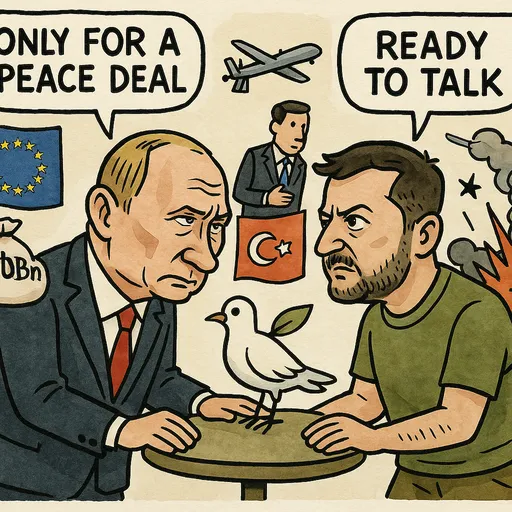
Coverage shows diplomacy at an uneasy pivot: the Kremlin repeatedly states Putin would only meet Zelensky to finalize a peace settlement, while Kyiv insists it is ready to negotiate immediately. European institutions and allies have approved a major financial package (around €90 billion) and fresh sanctions, and Turkey is actively pressing to revive talks as a possible mediator. On the ground the war remains intense, with repeated strikes (notably on Dnipro and near Chernobyl), high operational tempo and drone exchanges, and ongoing investigations into alleged war crimes. Meanwhile NATO and Western states adjust posture and share technology as political debates continue over sanctions waivers, aid priorities and long-term support.
Moscow's official line is consistent across outlets: a summit with Zelensky is acceptable only to conclude concrete agreements or to finalize an end to hostilities. Kremlin spokespeople frame any meeting as conditional, emphasizing negotiators must first reach substantive terms.
Ukraine's leadership repeatedly says it is ready to talk at any time and pushes for direct high-level engagement to break diplomatic deadlocks, while urging allies not to delay negotiations for other crises. Ukrainian officials also highlight battlefield resilience and tactical gains, notably through drone use and air-defence improvements.
European institutions and member states present a unified posture of continued support, approving a roughly €90 billion loan package alongside new sanctions aimed at increasing pressure on Moscow. National contributions and guarantees (for example from Spain) and announcements of military aid underscore sustained Western assistance.
Turkey positions itself as an active facilitator, with Erdogan publicly seeking to restart negotiations and offering to host or broker leader-level meetings. Ankara's diplomacy is portrayed as a practical channel to re-energize stalled talks between Kyiv and Moscow.
Coverage highlights tensions between Ukrainian expectations and Western policy choices, including Kyiv's criticism of a U.S. extension of a sanctions waiver and domestic U.S. debates on continued support. Parallel stories examine political manoeuvres aimed at influencing American backing and European leaders' responses to Russian narratives.
Reports document ongoing hostilities with repeated strikes, drone attacks, high numbers of incursions and reconstruction efforts in hard-hit areas; several articles underline immediate civilian casualties and damage. Separate but related coverage raises alarm about drone and missile activity near Chernobyl and other nuclear facilities, highlighting a heightened accident risk.
Ukrainian authorities and investigative outlets are reporting probes into alleged executions and mistreatment of prisoners of war, stressing accountability and legal follow-up. Coverage presents these inquiries as a significant and ongoing element of wartime justice efforts.
NATO air-policing incidents, national defence build-ups, the use of robotics and the transfer of battlefield expertise between states are framed as altering the military balance and raising proliferation concerns. Analysts highlight both capability shifts (drones, remote systems) and the regional security implications of technology transfers.
Human-interest and aid stories emphasize international donations, morale-boosting gestures and the human cost of prolonged deployments, with personal testimonies and charity-funded medical support drawing attention to soldiers and civilians. These pieces illustrate public and private contributions that sustain Ukraine amid heavy fighting.
Several briefs and regional digests synthesize recent developments, from Russia–Georgia dynamics to leadership moments and concise war summaries, offering readers a broader context for tactical and diplomatic shifts. These summaries aggregate statements, fronts' evolution and political signals shaping the conflict's trajectory.