
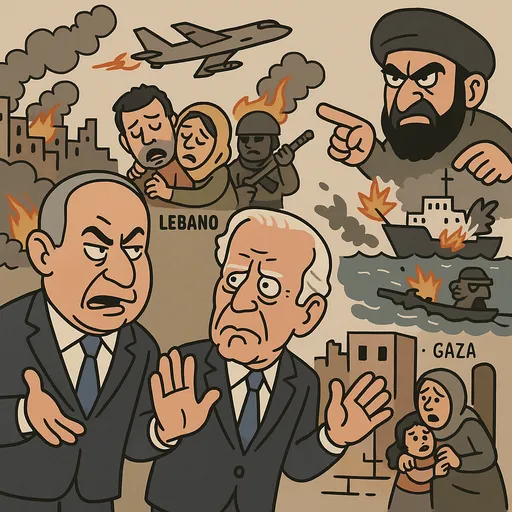
Fighting across multiple fronts has intensified: Israeli strikes and cross-border incidents in southern Lebanon have killed civilians including journalists, prompting Lebanese leaders to press for a ceasefire extension in Washington. Iran and its proxies have signalled capability and willingness to retaliate—seizing ships, releasing footage of attacks and warning of 'devastating blows'—while analysts warn missile preparations and maritime strikes raise the risk of a wider US–Iran confrontation. Western reporting highlights rising US military casualties, scenario analyses of potential ground operations and economic spillovers that are already affecting markets and pension funds. Gaza and the West Bank continue to suffer heavy civilian tolls and settler violence, underscoring a fragile humanitarian situation and the limits of current truces.
Lebanese authorities, local outlets and many international reports foreground civilian casualties (notably the killing of journalists) and place strong emphasis on preserving and extending the ceasefire. Beirut and sympathetic sources frame diplomacy—including planned Washington talks—as essential to protect civilians and seek accountability for strikes.
Israeli statements and allied reporting stress readiness to resume operations, border security challenges and incidents involving soldiers or settlers that complicate relations with neighbours. These sources frame many events as responses to threats from Hezbollah, Palestinian militants or breaches of security along borders.
Iranian outlets and reports sympathetic to Tehran highlight Revolutionary Guard actions, naval seizures in the Strait of Hormuz, missile preparations and hardline warnings against US or Israeli aggression. The emphasis is on deterrence, signalling capability and tying security demands to political and economic leverage.
Western and US-linked reporting focuses on military costs, scenario planning and the wider strategic consequences of escalation, including Pentagon casualty figures and analyses of risky options like ground operations. These outlets also track economic spillovers—market and corporate impacts—and stress uncertainty about diplomatic timelines and outcomes.
Gulf states and regional organisations condemn certain attacks, call for accountability or reparations, and voice concern that maritime and cross-border incidents risk wider instability. These sources combine diplomatic appeals, warnings about trade or economic fallout, and calls for collective regional responses.
Reports from Palestinian territories and sympathetic outlets centre on civilian deaths, displacement and settler violence, portraying a deepening humanitarian crisis and the fragility of truces. Coverage stresses the human cost—children among the dead, destruction of homes and the difficulties facing aid and reconstruction.
Neutral and editorial pieces assess maritime tactics, psychological warfare, the limits of talks and cultural impacts, and call for diplomacy that produces concrete results rather than symbolism. They probe accountability (attacks on rescuers, UN peacekeeper deaths), and highlight secondary effects such as pension- and market-level impacts.