
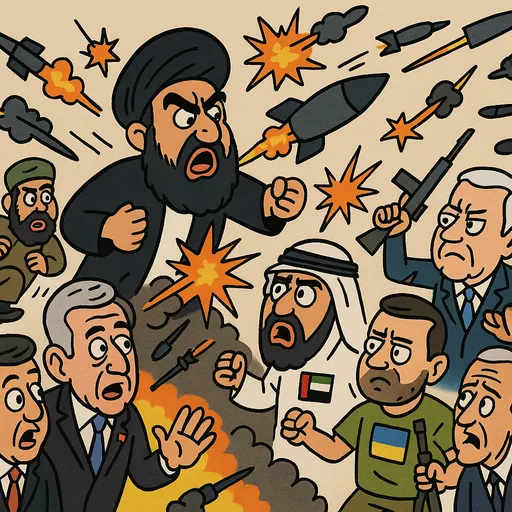
The Iran conflict has significantly escalated, extending beyond Iran's borders and involving multiple regional and global actors. Iran's expanded targeting of infrastructure and strategic sites in the Gulf, including the UAE and Oman, has heightened economic and security concerns, disrupting oil supplies and international trade routes. Israel faces increased challenges from Iranian-backed groups like Hezbollah, while its actions in the West Bank reflect exploitation of the broader conflict. Neighboring countries such as Pakistan experience direct spillover effects, and international players including the US and Ukraine are drawn into the conflict dynamics. Calls for diplomacy, notably from Turkey, emphasize the urgent need to prevent a wider regional war.
Chinese sources emphasize the broadening scope of the Middle East conflict, highlighting the involvement of Iran, the US, and Israel. They focus on the military strikes against civilian and energy infrastructure and the resulting impact on global energy markets and shipping routes. The viewpoint stresses the critical need for diplomatic efforts to contain the violence and prevent further destabilization.
Lebanese perspectives focus on Iran's strategic expansion of its target list, possibly reflecting directives from its new Supreme Leader, and the implications for Lebanon and the wider region. The viewpoint underscores Iran's intent to assert influence amid rising tensions and the risk of broader conflict, particularly through proxies like Hezbollah.
Articles from Israeli and Palestinian viewpoints highlight the surge in Israeli settler violence in the West Bank and Israel's strategic use of the Iran conflict to strengthen its position there. They also discuss Israel's efforts to provoke Gulf states into confrontation with Iran and the shifting regional alliances affecting the Palestinian question. This perspective reveals how the Iran war intensifies localized conflicts and alters longstanding political dynamics.
Sources from Gulf-related countries report on Iran's attacks targeting critical infrastructure in the UAE, Oman, and Dubai, causing economic disruption and heightened security risks. The focus is on the direct impact of these strikes on regional stability, oil markets, and international trade, reflecting the vulnerability of Gulf states amid escalating hostilities.
This cluster includes perspectives from countries like the US, Ireland, Canada, Nepal, and Turkey, highlighting the internationalization of the conflict. It covers the US seeking Ukrainian aid against Iranian drones, the economic and social disruptions in Pakistan due to the conflict, and Turkey's calls for diplomacy to prevent regional war. The viewpoint stresses the global security implications and the broad spillover effects beyond the immediate Middle East.