
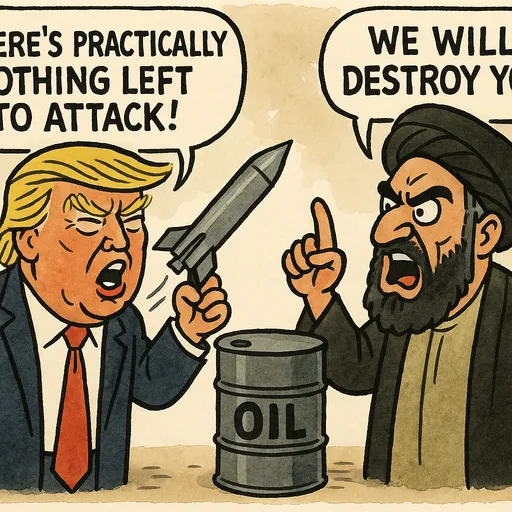
US President Donald Trump has consistently portrayed the conflict with Iran as nearing its end, claiming that there is "practically nothing left to attack" and expressing confidence in a swift US victory. His rhetoric emphasizes strong military action, warnings against Iranian provocations such as mining the Strait of Hormuz, and a commitment to "finish the job," reflecting a hardline stance. Meanwhile, Iranian officials respond with sharp criticism and threats, underscoring the adversarial and volatile nature of US-Iran relations. Internationally, concerns grow over the conflict's impact on global oil markets and regional stability, with some countries coordinating oil reserve releases to mitigate economic shocks. The discourse reveals a complex interplay of military posturing, political messaging, and escalating tensions that continue to shape the Middle East conflict landscape.
This cluster groups articles reflecting President Trump's assertive and confident statements about the US military campaign against Iran. Trump emphasizes that the war is nearly over, with most targets destroyed, and stresses the US's capability to control strategic areas like the Strait of Hormuz. His rhetoric includes warnings to Iran, declarations of victory, and a commitment to complete the mission, portraying strength and determination to achieve US objectives.
This group contains articles presenting Iran's and its officials' perspectives, which are sharply critical of Trump and the US. Iranian leaders denounce Trump with harsh language and issue warnings of severe consequences, including threats against Trump himself. These statements highlight the deep hostility and refusal to concede, reflecting Iran's stance of resistance and readiness for prolonged conflict.
Articles in this cluster focus on the broader international implications of the US-Iran conflict, particularly regarding global oil markets and regional security. They report on coordinated efforts by multiple countries to release oil reserves to stabilize prices and discuss the risks of escalating violence in the Middle East. This viewpoint underscores the global economic and geopolitical stakes tied to the conflict.