
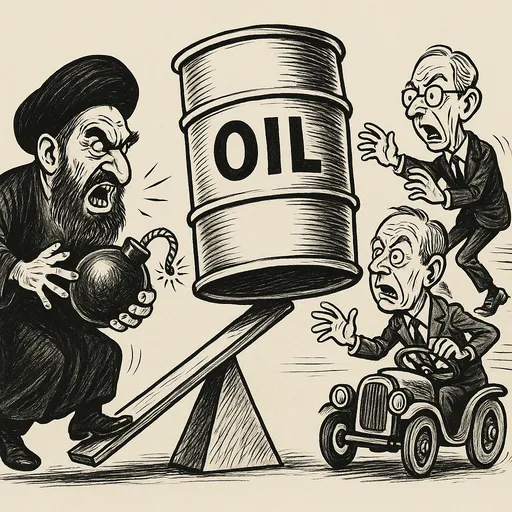
The ongoing conflict involving Iran and its regional adversaries has significantly disrupted Middle East oil markets, causing oil prices to surge above $100 and even warnings of $200 per barrel. Iran's threats to block Gulf oil exports and attacks on shipping routes have heightened fears of supply shortages, prompting strategic responses such as Saudi Arabia activating alternative pipelines and the IEA considering reserve releases. These developments have led to widespread economic impacts, including inflation risks in countries like South Africa and operational challenges for businesses and transport sectors across Asia and the Pacific. While some political leaders downplay the price surges as a "small price for peace," market volatility persists amid mixed signals about the conflict's trajectory and potential resolutions. The strategic importance of chokepoints like the Strait of Hormuz and Kharg Island underscores the fragility of global energy security in this tense geopolitical environment.
Iran consistently warns the global community to prepare for oil prices reaching $200 per barrel, linking this to its military actions and regional tensions. Tehran emphasizes its readiness to block Gulf oil exports and disrupt shipping routes as leverage against Western sanctions and military pressure. This perspective highlights Iran's strategic use of energy supply threats to influence geopolitical outcomes and global markets.
US and allied sources focus on the military operations against Iran and their effects on oil prices and global energy security. While acknowledging the price surges above $100 per barrel, some US leaders, including President Trump, characterize these increases as acceptable or a "small price for peace." The narrative also includes considerations of ending the conflict and managing strategic reserves to stabilize markets.
Countries across Asia, Africa, and the Pacific report significant economic and social consequences from rising oil prices and supply disruptions. These include fuel shortages, increased operational costs for transport and agriculture, inflation risks, and adjustments in trade and domestic fuel policies. Governments and businesses are adopting measures to mitigate impacts, reflecting the broad reach of Middle East tensions on global economies.
In response to the conflict and supply threats, key oil producers and international agencies have taken strategic actions such as activating alternative pipelines, releasing emergency reserves, and monitoring critical infrastructure like Kharg Island. Market reactions include historic weekly gains and sharp price fluctuations amid mixed signals about the conflict's progression. This cluster reflects efforts to manage and adapt to the volatile energy landscape shaped by geopolitical instability.