
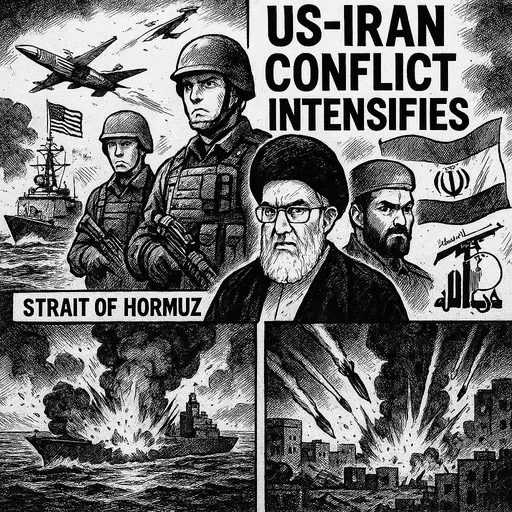
The US-Iran military conflict has intensified with multiple attacks on strategic maritime routes, military bases, and civilian sites, including the Strait of Hormuz, a critical global oil passage. Iran and its allies, such as Hezbollah, have launched coordinated strikes against Israel and US interests, while the US and Israel have conducted extensive air and naval operations targeting Iranian assets. The conflict has resulted in significant casualties, including US military personnel and civilians, and has caused substantial economic costs and disruptions to global energy markets. International actors, including the UN and G7, have called for restraint and security measures to protect shipping lanes, while diplomatic efforts continue amid accusations and counter-accusations. The situation remains volatile with no clear resolution in sight, raising concerns about broader regional instability and global economic impacts.
This cluster reflects the viewpoint of the United States and its allies, emphasizing military actions against Iran, including strikes on Iranian naval and missile capabilities, protection of maritime routes, and responses to Iranian attacks. The US highlights the financial and human costs of the conflict, acknowledges intelligence errors leading to civilian casualties, and stresses ongoing efforts to secure strategic locations like the Strait of Hormuz. The narrative underscores the necessity of military pressure on Iran to curb its regional aggression and protect global energy security.
This group presents Iran and its regional allies' perspective, focusing on their military responses to US and Israeli actions, including missile and drone strikes on US bases and Israeli targets, attacks on shipping vessels, and declarations of control over the Strait of Hormuz. Iran emphasizes its readiness for prolonged conflict and vows to continue retaliatory operations until perceived aggression ceases. The narrative highlights Iran's strategic adaptations and its framing of military actions as defensive and justified responses to external threats.
This cluster includes perspectives from international organizations, regional states, and global powers emphasizing diplomatic efforts, security concerns, and economic implications of the US-Iran conflict. The UN Security Council and G7 have condemned Iranian attacks and called for restraint, while countries like Saudi Arabia, Bahrain, and the UAE express alarm over regional security. Diplomatic dialogues, including those involving China, Russia, and the US, aim to manage tensions and maintain freedom of navigation in critical waterways. The narrative highlights the broader geopolitical stakes and the risks of wider instability and economic disruption.