
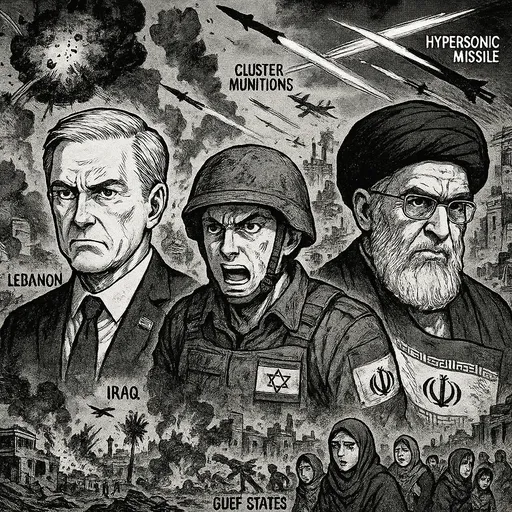
The conflict between the United States, Israel, and Iran has escalated significantly, with both sides conducting intense missile strikes and air attacks targeting military and critical infrastructure. Iran has launched multiple waves of missile and drone attacks against US and Israeli bases, while the US and Israel have responded with heavy bombardments on Iranian military and energy facilities. The hostilities have caused substantial casualties and displacement, particularly in Lebanon and Iran, and have drawn in neighboring countries like Iraq and Gulf states, further destabilizing the region. Diplomatic efforts have stalled, with Iran rejecting negotiations and the US maintaining a hardline stance, raising fears of a prolonged and intensifying conflict. International concerns grow over the use of advanced weaponry, including hypersonic and cluster munitions, and the risk of wider regional and global repercussions.
Iran portrays its missile strikes and military operations as a necessary and intensified response to US and Israeli aggression, emphasizing its readiness for prolonged conflict and rejecting diplomatic negotiations. Iranian officials and the Revolutionary Guard highlight their strategic capabilities and warn of continued retaliation, framing the conflict as a defensive struggle against external threats. This perspective underscores Iran's commitment to sustaining military pressure and its refusal to accept a truce or foreign demands.
The United States and Israel focus on conducting heavy airstrikes and missile attacks targeting Iranian military installations, energy infrastructure, and missile launch sites to degrade Iran's capabilities. US officials emphasize the scale and intensity of their operations, often highlighting the reduction in Iranian attacks as a measure of success. Israel warns of and responds to missile launches from Iran, maintaining a posture of active defense and retaliation. This viewpoint stresses the necessity of military pressure to counter Iranian threats and protect regional security.
Neighboring countries and international actors express alarm over the escalating violence, missile strikes, and humanitarian crises resulting from the US-Iran conflict. Gulf states and the EU condemn Iranian attacks on civilian infrastructure, while NATO responds to missile threats near its member Turkey. Analysts and commentators warn of the risks of prolonged war, strategic miscalculations, and the broader destabilization of the Middle East. This perspective highlights the urgent need for de-escalation and diplomatic solutions to prevent further regional and global fallout.