
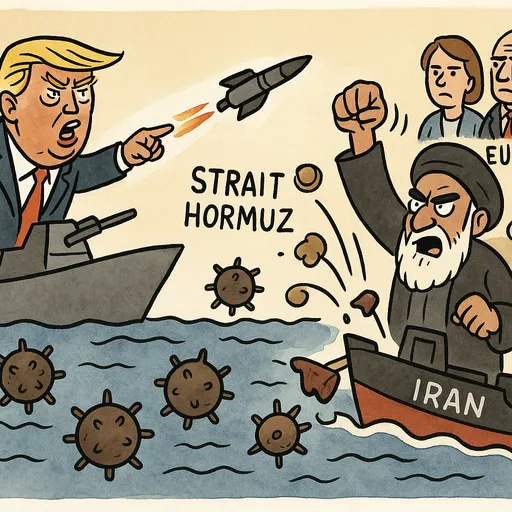
Tensions in the Strait of Hormuz have sharply escalated as Iran reportedly began laying naval mines to block oil shipments, prompting the United States to destroy multiple Iranian mine-laying vessels to secure maritime navigation. The US, under President Trump, issued stern warnings of unprecedented military retaliation if Iran continued its blockade efforts. Iran, in turn, vowed to maintain the blockade and fight as long as necessary, linking navigation freedom to diplomatic conditions. International actors, including European countries led by France, are preparing defensive measures to protect this critical oil transit route amid fears of wider conflict and global energy market disruption. The situation remains volatile with ongoing military actions, diplomatic threats, and concerns over regional stability and global oil supply.
The United States and its Western allies emphasize the necessity of military operations to destroy Iranian mine-laying vessels to ensure freedom of navigation through the Strait of Hormuz, a vital global oil shipping route. They frame their actions as defensive and aimed at preventing Iran from disrupting international maritime traffic and global energy supplies. The US, led by President Trump, has issued strong warnings to Iran against further provocations, while European countries, notably France, are preparing to bolster regional defenses and escort vessels to maintain stability.
Iran asserts its right to block the Strait of Hormuz as a strategic response to US and allied military actions, pledging to continue its blockade and fight until its conditions are met. Iranian officials link the freedom of navigation to diplomatic negotiations and reject ceasefire calls, emphasizing their determination to control this critical maritime chokepoint. The Iranian Revolutionary Guard and government stress their capability to disrupt global oil supplies as leverage in the ongoing conflict.
Other international actors and analysts express concern over the escalating conflict's impact on regional stability and global energy markets. European nations, led by France, are preparing defensive missions to reopen and secure the Strait of Hormuz post-conflict escalation. Analysts highlight the vulnerability of maritime routes to asymmetric threats like mines and small boats, questioning the ability to guarantee uninterrupted oil flow. The situation exacerbates humanitarian crises and complicates diplomatic efforts to de-escalate tensions.