
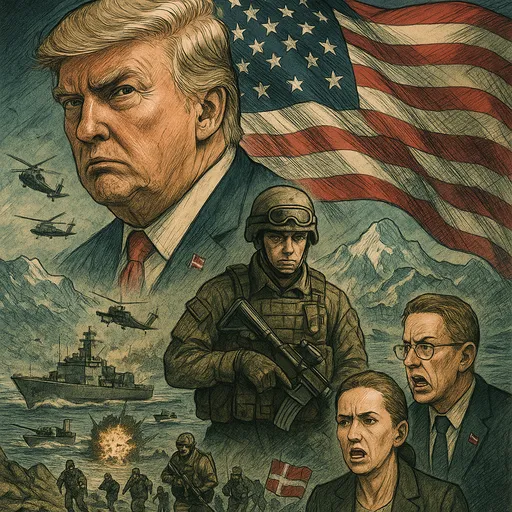
The United States, under President Donald Trump, has openly considered various options, including military force, to acquire Greenland, a self-governing Danish territory. This unprecedented stance has sparked strong diplomatic backlash from Denmark and European allies, who view the move as a threat to sovereignty and NATO unity. US officials and advisors have emphasized Greenland's strategic importance in the Arctic, linking acquisition efforts to national security and geopolitical competition. While some experts deem a military invasion unlikely, the discussions have heightened tensions and raised concerns about Arctic militarization and international relations. Greenland and Denmark have sought diplomatic engagement to address the escalating situation.
This cluster reflects the US perspective, emphasizing the strategic importance of Greenland in the Arctic and the consideration of all options, including military force, to acquire the territory. US officials and advisors frame the acquisition as a national security priority to deter adversaries and assert geopolitical influence in the region. The discourse includes explicit mentions of potential military deployment and the legitimacy of US claims, underscoring a readiness to use force if deemed necessary.
This cluster captures the viewpoint of Denmark and European countries, highlighting feelings of betrayal and strong opposition to US threats against Greenland's sovereignty. Danish politicians express deep concern over the US stance, viewing it as a serious threat to NATO and regional stability. Efforts to engage diplomatically with US officials, including meetings with Senator Marco Rubio, demonstrate attempts to de-escalate tensions and protect Greenland's autonomy amid growing geopolitical sensitivities.
This cluster presents expert opinions that downplay the likelihood of an actual US military invasion of Greenland. Analysts emphasize the importance of diplomatic solutions and caution against overestimating the probability of forceful takeover. The perspective provides a more measured view of the situation, suggesting that while tensions are high, military action remains improbable and that international relations will likely prioritize negotiation over conflict.