
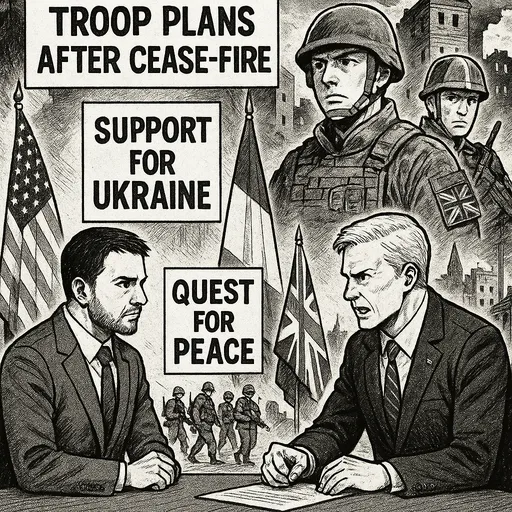
Multiple allied nations, led by the United States, France, and the United Kingdom, have coordinated plans to support Ukraine through security guarantees and potential troop deployments contingent on a ceasefire or peace agreement with Russia. The US is expected to take a leading role in monitoring any ceasefire, while France and the UK have agreed to send troops to Ukraine to help stabilize the region post-conflict. These initiatives reflect a strong international commitment to Ukraine's sovereignty and defense, though some European public opinion remains cautious about escalating military involvement. Diplomatic talks continue in Paris, involving US delegations and Ukrainian officials, aiming to advance peace negotiations despite challenges such as absent key actors and ongoing hostilities. Overall, the coalition of willing countries seeks to balance military support with diplomatic efforts to achieve a sustainable resolution to the conflict.
France, the United Kingdom, and their European allies emphasize concrete military commitments to Ukraine, including the deployment of troops following a ceasefire or peace deal. This perspective highlights the readiness to provide direct security guarantees and stabilize Ukraine through multinational forces, reflecting a proactive approach to deter further aggression and support Ukraine's sovereignty.
The United States focuses on leading ceasefire monitoring efforts and sustaining diplomatic negotiations with Ukraine and allies. While not always a direct signatory to troop deployment agreements, the US plays a pivotal role in coordinating international support, reaffirming security guarantees, and pushing forward peace talks despite challenges such as missing key participants and ongoing conflict complexities.
Some European perspectives express caution and concern regarding the deployment of troops to Ukraine, anticipating public backlash and political controversy. This viewpoint underscores the delicate balance European governments must maintain between supporting Ukraine militarily and managing domestic opinion wary of escalating the conflict or broader involvement.