
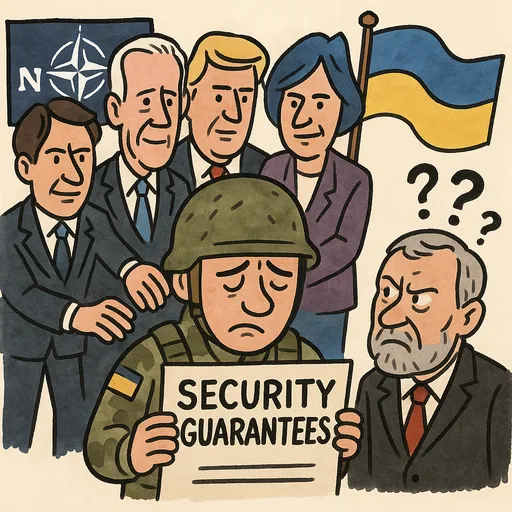
A broad coalition of over 30 countries, including the US, European nations, and NATO members, has agreed on a framework to provide robust, binding security guarantees to Ukraine amid the ongoing conflict with Russia. Key agreements include the establishment of a multinational peacekeeping force to be deployed following a ceasefire, with commitments to strengthen Ukraine's defense capabilities on land, air, and sea. While there is strong unity among Western allies, some debates and skepticism remain regarding the extent and nature of military involvement. The coalition emphasizes diplomatic efforts alongside military support to ensure Ukraine's sovereignty and regional stability. This marks a significant escalation in international cooperation to deter Russian aggression and support Ukraine's post-conflict security architecture.
Countries such as France, the United Kingdom, the United States, and other European allies emphasize the importance of establishing a multinational peacekeeping force and binding security guarantees to support Ukraine's defense and sovereignty. They highlight the signing of declarations and letters of intent, the creation of military hubs, and coordinated diplomatic efforts as key steps toward stabilizing Ukraine post-conflict. This perspective underscores a unified Western front aiming to deter Russian aggression through both military and diplomatic means.
Some European leaders and figures express reservations and ongoing debates about the scope and nature of military involvement in Ukraine. Concerns include the risks of escalation and the political complexities of deploying troops, as well as differing national stances on sending forces. This viewpoint reflects the challenges within the coalition to balance robust support with diplomatic caution and domestic political considerations.