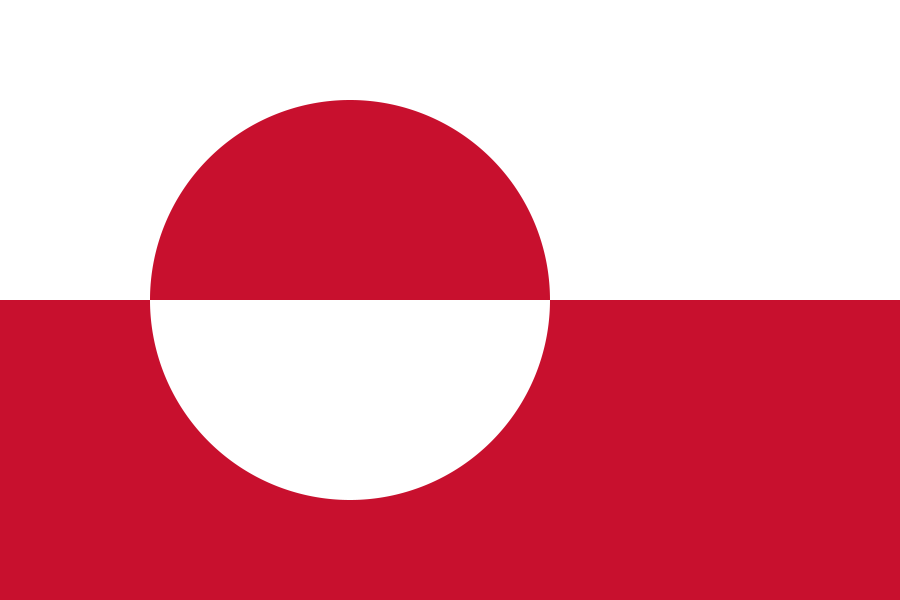

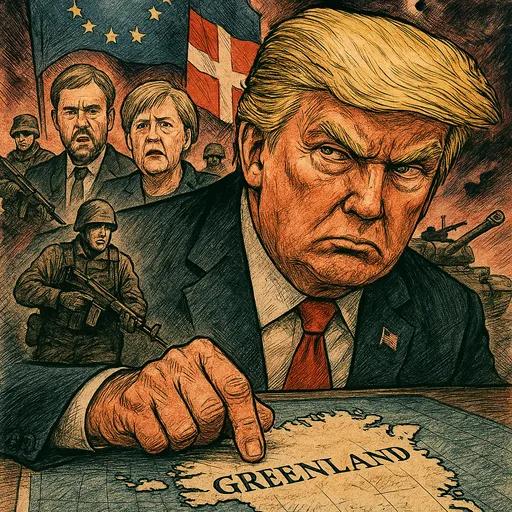
Recent reports reveal that US President Donald Trump and his administration seriously considered acquiring Greenland, including the possibility of military intervention. This stance has sparked significant diplomatic tensions, with Denmark, Greenland, and European allies strongly opposing any US attempts to annex or militarily seize the territory. European leaders have rallied in defense of Greenland's sovereignty, warning that such actions could jeopardize NATO and transatlantic relations. Greenland and Denmark have sought urgent diplomatic talks with US officials to clarify intentions and reduce tensions. The situation underscores the strategic importance of Greenland in Arctic geopolitics and the broader contest for influence in the region.
This cluster reflects the US perspective, particularly from the Trump administration and its advisors, emphasizing the strategic value of Greenland in the Arctic. They consider multiple acquisition options, including purchase and military intervention, viewing military action as 'always an option' to secure US interests. This viewpoint underscores a willingness to assert control over Greenland to enhance US geopolitical and defense positioning in the Arctic region.
Denmark and Greenland strongly reject US acquisition attempts, emphasizing Greenland's autonomy and sovereignty. Danish leadership warns that any US military action would severely damage NATO, potentially leading to its dissolution. Both governments have actively sought diplomatic engagement with US officials to address and de-escalate tensions, highlighting the importance of respecting international law and alliance solidarity.
European countries and other international allies have united in support of Denmark and Greenland, condemning US threats and emphasizing respect for Greenland's sovereignty. They call for diplomatic solutions and multilateral cooperation to ensure Arctic security and stability. This cluster reflects broader geopolitical concerns about US unilateral actions and the need to uphold international norms in the Arctic region.