
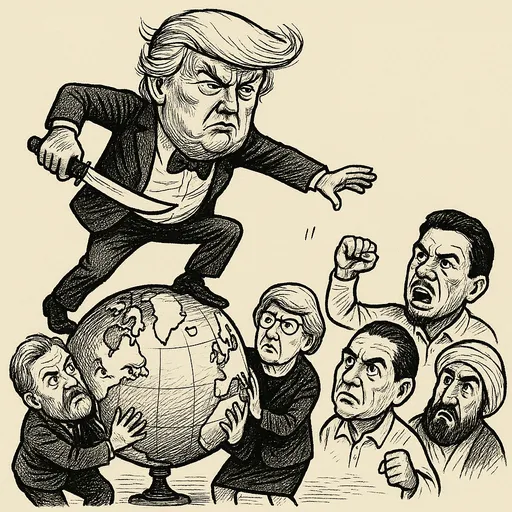
US President Donald Trump's repeated threats and ambitions regarding Greenland's annexation have sparked strong opposition from Denmark, Greenland, and European allies, who emphasize sovereignty and warn of severe consequences for NATO and transatlantic relations. Greenland's leadership calls for respect and cooperation, rejecting US takeover fears while urging calm. Concurrently, Trump's aggressive posture towards Latin American countries, especially Venezuela and Colombia, including military threats and assertions of control, has escalated regional tensions, eliciting defensive responses from leaders like Colombia's president. The US also intensified warnings and threats against Iran amid domestic protests, further complicating international relations. These developments reveal a pattern of US assertiveness provoking diplomatic backlash and concerns over sovereignty, alliance stability, and regional security.
Denmark and Greenland, supported by European allies, firmly reject any US attempts to annex Greenland, emphasizing the island's sovereignty and the right of its people to decide its future. Danish Prime Minister Mette Frederiksen warns that any US military action would jeopardize NATO and transatlantic security, highlighting the strategic importance of Greenland and the risks of damaging longstanding alliances. Greenlandic leaders call for calm and cooperation, dismissing panic and aggressive rhetoric while stressing the need for respectful diplomacy.
President Trump has taken an aggressive stance towards Latin American countries, particularly Venezuela and Colombia, involving military interventions, threats, and declarations of US control over Venezuela's political transition. These actions have heightened regional tensions, eliciting strong responses from leaders like Colombia's Gustavo Petro, who vows to defend his country. The US strategy includes pressuring Venezuelan officials and signaling readiness for further interventions in Cuba, Mexico, and Colombia, reflecting a broader policy of exerting influence and control in the Western Hemisphere.
The United States, under Trump's administration, has issued stern warnings to Iran concerning its handling of widespread protests and internal unrest. Trump threatened severe retaliatory strikes if protesters are harmed, signaling a hardline approach to Iran's domestic issues. These warnings contribute to escalating tensions between the two countries, with Iran responding by cautioning against chaos and preparing to confront potential hostile actions, thereby intensifying the geopolitical conflict.