

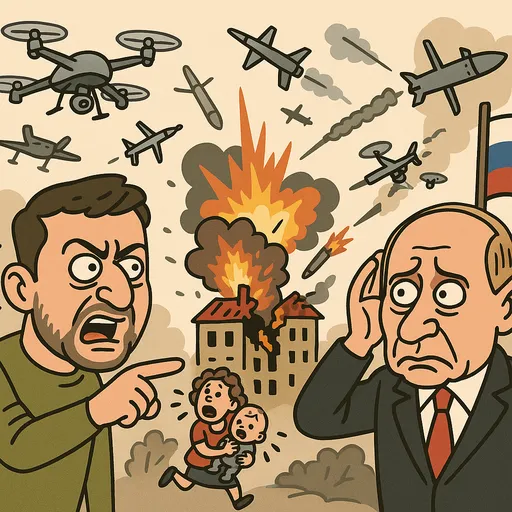
The Russia-Ukraine conflict continues to intensify with frequent drone and missile attacks causing civilian casualties and infrastructure damage on both sides. Ukrainian drone strikes have targeted Russian border regions and military-industrial sites, while Russia has launched air raids and missile strikes on Ukrainian cities including Kyiv and Kharkiv, resulting in deaths and injuries, including children. Both countries report significant drone interceptions, highlighting the scale of aerial hostilities. Diplomatic efforts, including peace talks and allied meetings, are ongoing but face challenges due to the persistent violence. Additionally, conflicting narratives emerge regarding specific incidents, such as claims about attacks on Putin's residence, reflecting the complex information warfare surrounding the conflict.
Sources from Ukraine, the USA, Canada, and European countries emphasize the humanitarian toll of Russian missile and air strikes on Ukrainian cities, highlighting civilian casualties, including children, and damage to critical infrastructure. They underscore the escalation of violence despite ongoing diplomatic efforts and call attention to Russia's aggressive military actions as a primary driver of the conflict's severity.
Russian and allied sources focus on Ukrainian drone strikes targeting Russian border regions and critical military-industrial facilities, portraying these as provocations and threats to national security. They report extensive drone interceptions and air defense successes, framing the conflict as a defensive struggle against Ukrainian aggression and emphasizing the disruption caused by these attacks within Russian territory.
International sources, including from India, Romania, Singapore, and Switzerland, provide balanced reporting on the ongoing hostilities, noting both Russian attacks on Ukraine and Ukrainian drone strikes on Russia. They highlight the timing of attacks in relation to peace talks and diplomatic efforts, reflecting concerns about the fragile nature of negotiations and the broader geopolitical implications of the conflict.