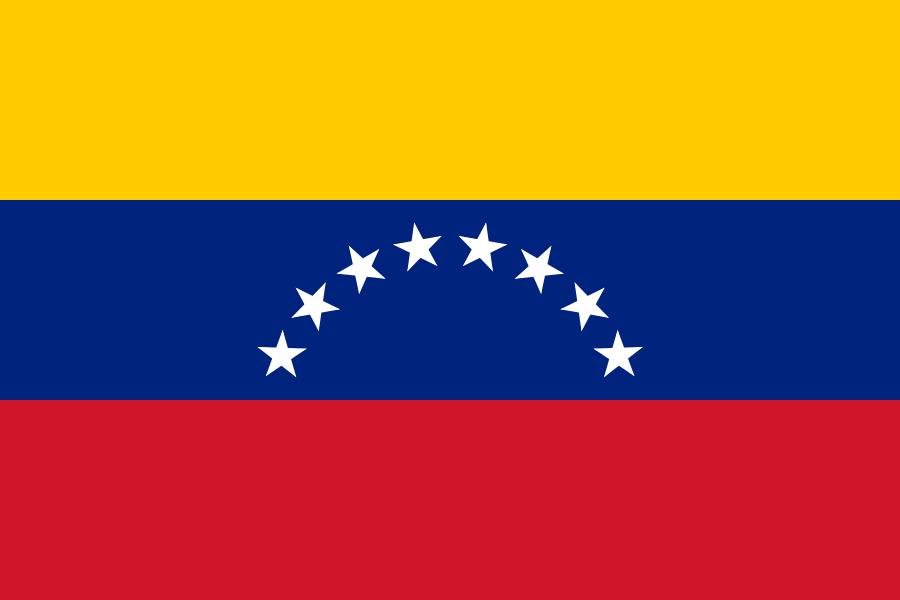

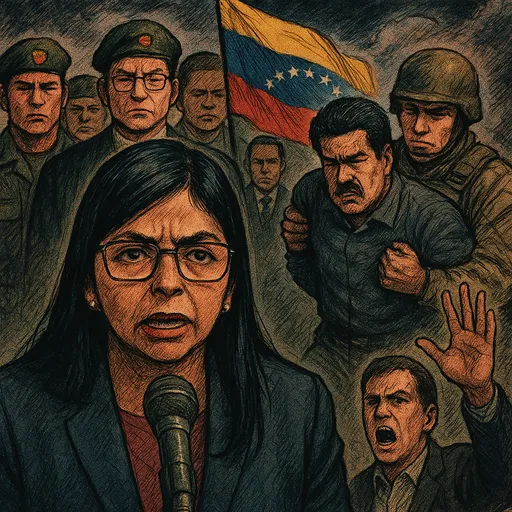
Following the capture and removal of Nicolás Maduro by U.S. forces, Delcy Rodríguez has been appointed as the interim president of Venezuela, receiving support from the Venezuelan military and judiciary. This leadership change has sparked a complex political crisis marked by uncertainty, with opposition figures calling for democratic transition and the release of political prisoners. International reactions vary, with some emphasizing the U.S. role and others urging calm and respect for sovereignty. Despite the change in figurehead, Maduro's allies remain influential, and Venezuela faces significant challenges in achieving political stability and democracy. The situation remains tense, with ongoing power struggles and diplomatic efforts shaping the country's future.
This viewpoint, reflected mainly by Venezuelan military and judiciary sources as well as some international observers, supports Delcy Rodríguez's appointment as interim president following Maduro's capture. It emphasizes the legitimacy granted by internal institutions and the necessity of maintaining governance continuity amid the crisis. The military's backing is seen as crucial for political stability, and calls for cooperation with the United States are highlighted to navigate the transition period.
Represented by Venezuelan opposition figures and diaspora communities, this perspective stresses the need for a genuine democratic transition, including the release of political prisoners and respect for electoral outcomes. It views Rodríguez's interim presidency skeptically, urging perseverance until a democratically elected leader like Edmundo González assumes office. The opposition highlights ongoing human rights concerns and the importance of restoring democratic institutions.
This cluster includes international media and analysts focusing on the U.S. military operation that led to Maduro's capture and its impact on Venezuela's sovereignty and political landscape. It discusses the legacy of Hugo Chavez, the challenges facing the new leadership, and the complex international relations involved. The U.S. role is seen as pivotal but controversial, with concerns about the power vacuum and the future of Venezuelan governance.
This viewpoint, expressed by the interim leadership and some international actors, calls for a balanced and respectful diplomatic relationship between Venezuela and the United States. It reflects efforts by Delcy Rodríguez to seek dialogue and reduce tensions following the U.S. intervention. The approach aims to stabilize Venezuela's international standing while navigating the internal political crisis.