
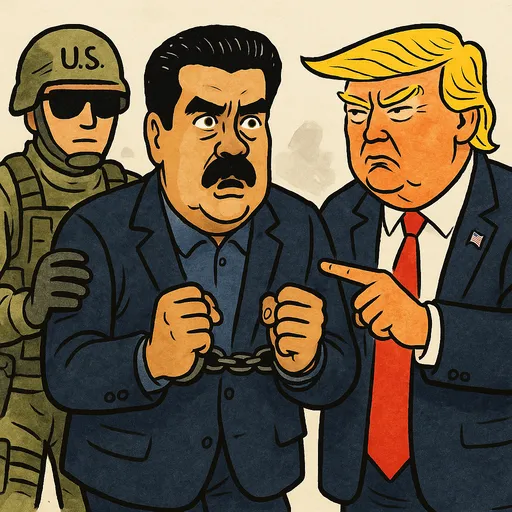
In a highly coordinated and unprecedented military operation, US forces captured Venezuelan President Nicolás Maduro and transferred him to custody in New York, marking a significant escalation in US-Venezuela relations. The operation involved extensive intelligence gathering, airstrikes, and special forces raids, resulting in casualties including 32 Cuban nationals allied with Maduro. The US, led by President Donald Trump, declared intentions to govern Venezuela until a political transition occurs, provoking mixed international reactions ranging from support to condemnation. The capture has intensified geopolitical tensions, raised questions about sovereignty and legality, and triggered protests and political divisions within Venezuela and across Latin America. The event also reverberated in global markets and diplomatic circles, highlighting the complex interplay of regional stability, international law, and US foreign policy shifts.
Articles from the USA, Romania, Malta, and some European countries present the operation as a law enforcement and strategic action aimed at removing a corrupt and criminal regime. They emphasize the US's role in capturing Maduro and the intention to govern Venezuela temporarily to ensure a democratic transition. This viewpoint highlights the operation as a necessary intervention to restore order and combat illicit activities linked to Maduro's government.
Articles from Latin American countries and regional organizations reveal a polarized response, with some leaders condemning the US military intervention as a violation of sovereignty and others supporting the removal of Maduro. The Community of Latin American and Caribbean States (CELAC) and various governments express concern over instability and foreign interference, reflecting deep political divisions and uncertainty about Venezuela's future.
Cuban and allied sources strongly condemn the US operation, highlighting the deaths of 32 Cuban nationals during the raid and denouncing the intervention as reckless and illegal. These articles emphasize the human cost and international tensions resulting from the US action, framing it as an aggressive violation of Venezuelan and regional sovereignty.
Several articles from diverse countries provide in-depth descriptions of the US operation, including the use of stealth drones, cyber-attacks, and intelligence from a CIA source inside the Venezuelan government. These accounts focus on the tactical and strategic aspects of the raid, underscoring the complexity and scale of the mission that led to Maduro's capture.
Articles from Venezuela and diaspora communities report mixed feelings among citizens, including fear, confusion, protests, and calls for loyalty to Maduro. Maduro's family and loyalists vow defiance despite his capture, highlighting ongoing political turmoil and uncertainty about the country's leadership and stability.
Some sources focus on the legal implications of Maduro's capture, his detention in a US prison known for high-profile inmates, and upcoming court appearances. These articles raise questions about the legality of the operation, respect for international law, and the humanitarian aspects of Maduro's imprisonment.
Analyses from various countries discuss the broader geopolitical consequences of the US operation, including its impact on US relations with Russia, China, Iran, and Latin America. The operation is seen as a signal of US willingness to use force in the region, with comparisons to past interventions like Panama, and has triggered calls for caution and peaceful resolution from international actors such as Indonesia and the African Union.
Some articles highlight the immediate economic impact of Maduro's capture, noting fluctuations in oil and gold prices due to uncertainty in Venezuela's political future. These reports reflect concerns about the stability of Venezuela's vast oil reserves and the potential effects on global markets.