
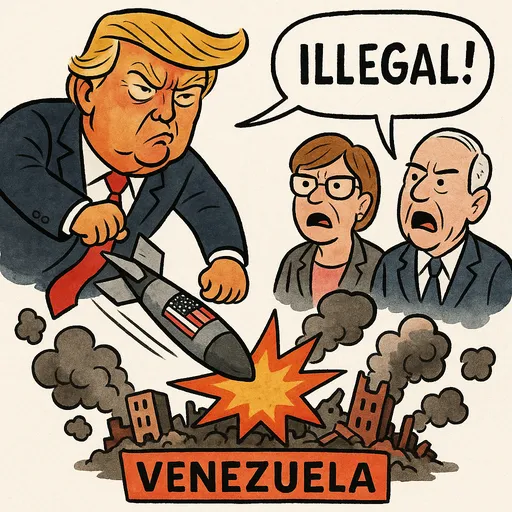
The recent US military strikes on Venezuela, authorized by President Trump, have led to significant destruction, casualties, and heightened geopolitical tensions. The attacks targeted key Venezuelan infrastructure and resulted in at least 40 deaths, provoking widespread condemnation from the international community, including countries like Russia, China, Mexico, and regional organizations such as ALBA. Within the US, political figures are deeply divided, with some condemning the strikes as illegal and reckless, while others support the intervention as a stance against dictatorship. The strikes have caused regional instability, including flight cancellations across the Caribbean and military deployments on borders, while experts and governments call for restraint and adherence to international law. The situation remains fluid, with ongoing debates about sovereignty, legality, and the future political landscape in Venezuela and the broader region.
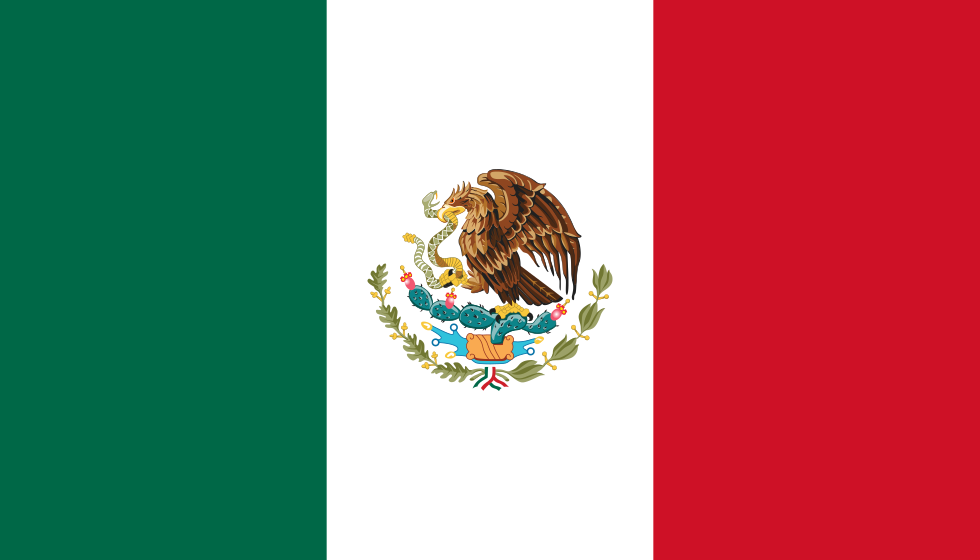
Many countries and international organizations view the US strikes as a violation of international law and Venezuelan sovereignty. Nations such as Mexico, China, Russia, and members of ALBA have condemned the attacks, calling for respect of international norms and peaceful conflict resolution. This perspective emphasizes the risks of destabilizing global order and the dangers of unilateral military interventions without UN authorization.
Within the United States, the military action has sparked significant political debate. Some US politicians, including former Vice President Kamala Harris and various senators, have criticized the strikes as illegal, reckless, and harmful to American interests. Others support the intervention as a necessary measure against the Maduro regime, highlighting deep partisan divides over foreign policy and executive authority in military actions.
The US strikes have caused immediate regional instability, including flight cancellations across the Caribbean and military deployments along borders, notably by Colombia. Neighboring countries and regional actors express concern over spillover effects and call for preparedness amid escalating tensions. This viewpoint focuses on the practical consequences of the conflict on regional security, transportation, and diplomatic relations.
Venezuelan authorities and regional allies strongly condemn the US military actions as aggressive violations of sovereignty, with President Maduro declaring a state of emergency. Latin American political dynamics are influenced by the strikes, affecting electoral campaigns and regional alliances. Opposition leaders and organizations emphasize the critical nature of these events for Venezuela's future and call for solidarity against foreign intervention.
Several articles provide detailed timelines, satellite imagery, and expert analyses of the US military strikes, highlighting the complexity and many unknowns surrounding the operation. Reports include casualty figures, descriptions of targeted locations, and ongoing investigations into the legality and consequences of the attacks. This perspective underscores the evolving nature of information and the need for further clarity.
Some international figures, such as Ukrainian President Zelensky, praise the US action as a firm stance against dictatorships, linking it to broader geopolitical struggles. Other countries like Turkey call for restraint but acknowledge the complexity of the situation. This cluster reflects the geopolitical alignments and differing international attitudes toward US intervention in Venezuela.