
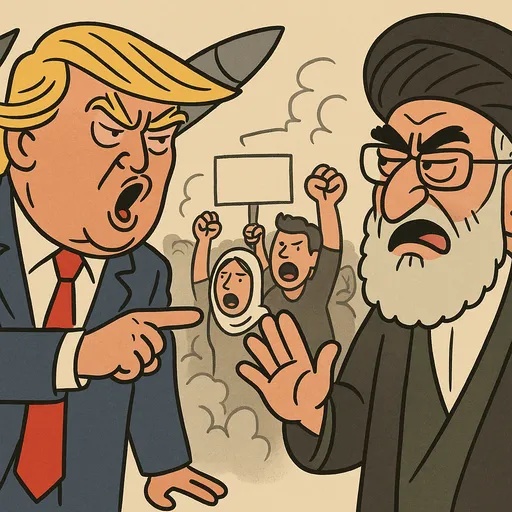
US President Donald Trump has issued multiple warnings threatening military intervention in Iran if the Iranian government violently suppresses ongoing protests. These statements emphasize US support for Iranian protesters and signal readiness to act if protesters are harmed, significantly escalating tensions between the two countries. Iran has condemned these threats as reckless and dangerous, warning of severe consequences and labeling any foreign intervention a 'red line.' The rhetoric from both sides reflects deepening geopolitical strain amid widespread domestic unrest in Iran triggered by economic hardship and political grievances. International observers remain concerned about the potential for further escalation and regional instability.
Articles from the USA, Australia, Canada, and several other countries highlight Trump's assertive stance, emphasizing US readiness to intervene militarily to protect Iranian protesters. These sources focus on human rights concerns and frame the US position as a protective measure against violent crackdowns by Iranian authorities. The rhetoric underscores a confrontational approach aimed at pressuring Iran to cease repression of dissent.
Articles from Iran and allied or regional perspectives condemn Trump's threats as reckless, inflammatory, and dangerous provocations. They emphasize Iran's sovereignty and warn that any foreign intervention would cross a 'red line,' potentially triggering chaos and severe retaliation. These sources portray the US rhetoric as exacerbating tensions and destabilizing the region further.
Articles from countries like Greece and others provide analytical views on the escalating rhetoric, noting the risks of increased volatility in the Middle East. They discuss the political timing of Trump's threats and the potential for these statements to inflame an already fragile geopolitical situation. These perspectives focus on the broader implications of the US-Iran confrontation beyond immediate protest-related events.